Cappadocia Day Two

Merhaba

Shalom and Happy Passover too

  There were 24 of us on the bus trip plus Taṣ our guide and Kohan (sp) our driver.  It was a great group with about a dozen variations of English being spoken!  Our pals Mary and Rick were there too which made it more fun for us.  We didn’t have to plan or make decisions…other than when to go to dinner or be ready for the bus.  The group voted and everyone good accepted the decisions.  Occasionally someone was “last” onboard, but not by more than a few minutes.  There’s something to be said for letting someone else make the plans and just having to show up!

Ru

                Eḡirdir Morning

I love Eḡrdir more for its mountains than the lake, unusual for me as used to not be a “mountain person.”   It’s one of those places that if you hit it just right your first visit, and Randal and I did, you always love it.  http://www.mydoramac.com/wordpress/?p=7322 is the story of our first visit with lots of photos and information about the area.  This time Eḡirdir was a quick overnight stop on our way to Cappadocia. 

I have two Eḡirdir stories from this visit. I’d decided to bring my laptop on this trip rather than our travel computer so I could download photos and begin to work on these emails.  That meant I was in charge of the computer, electrical cords and adaptors needed for it to work in the hotel electrical outlets.  I brought the wrong adaptor!  That meant we couldn’t recharge the computer or my lithium camera batteries.  Not a good thing.  Randal didn’t kill me.  He just went with me for a walk around town looking for adaptors.  We knew the town from our prior visit and we borrowed an adaptor from the hotel desk clerk to show what we needed which helped a lot.   It was about 6 PM and getting dark and cold.  Many shops were already closed or closing.  We did find one shop that sold a variety of things and went inside.  A young boy about 10 was there and shook his head no when we showed him what we needed.  But then he motioned for us to wait and went to get his father.  His dad immediately started calling around and found a shop that sold adaptors and then told his son to take us there.  It was a few streets over, not far.  But the young boy was not familiar with it so he stopped in a bakery and asked then doubled back to the correct street where the shop was located.  Once we were inside and being helped he quickly left the shop heading home.  I had to call after him as we wanted to give him a few liras to thank him. He smile and thanked me for them but there was every indication that he had not expected it at all.   He was polite and helpful and we weren’t the least bit surprised as we’d come to expect this type of behavior in the Turkish interior towns.

My second story is that the next morning I got myself up and out of the hotel by 6 am to take a walk through Eḡirdir.  It was cold and windy.  The sun was struggling to get itself up.  There were even snow flurries.  But I knew my way around so it was easy to get up and go and not worry about finding my way.  Breakfast didn’t begin until 7 am and we weren’t boarding the bus until 9 am, so I had time for my walk.

clip_image001

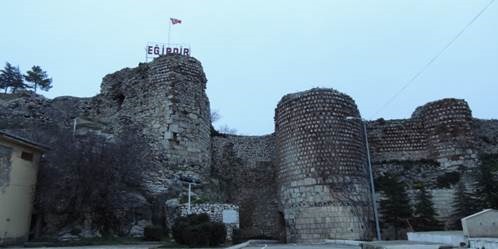
The fortress


clip_image002

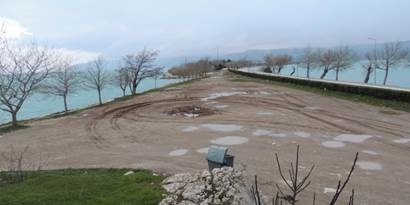
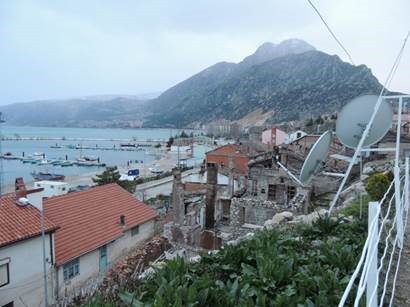
The peninsular where we’d had dinner and where Randal and I had stayed at Ali’s Pension in 2011.


clip_image003

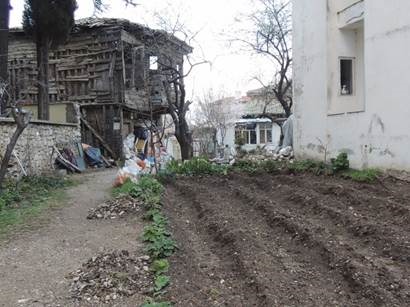
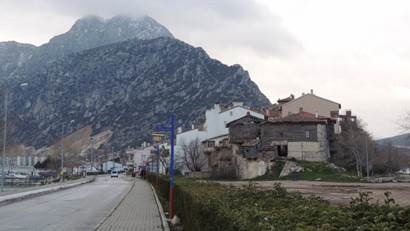
I love the old wood and stone buildings…some abandoned Greek homes.


clip_image004


clip_image005

I especially love the mountain behind the town.  We motorbiked up part way last visit.


clip_image006 clip_image007

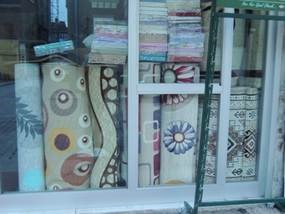
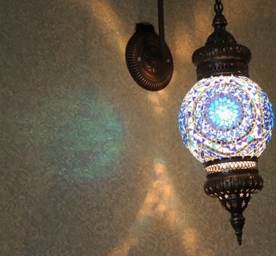
Modern rugs and lamps with designs  tied to tradition.

clip_image008

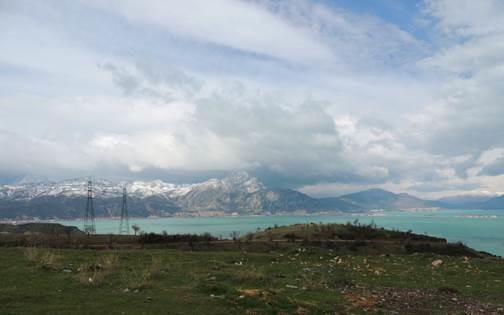
Looking back towards Eḡirdir as we traveled towards Beyṣehir and Konya.


clip_image009

Eḡirdir is famous for its apples so Taṣ stopped and bought us some local apples.  These were last year’s crop, but still good!


http://www.mydoramac.com/wordpress/?m=201107 is the story of our amazing motorbike ride to Beysehir from Eḡrdir and our visit to Konya and the Whirling Dervishes in 2011.

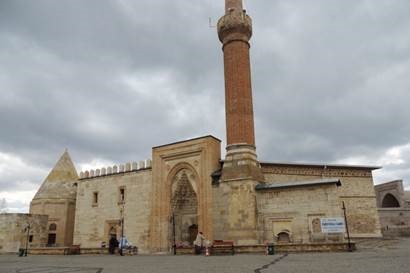
The plan this trip was to go directly to Konya and visit the Mevlana Museum and the Selimiye Mosque.  But the mosque was closed for renovation so we stopped in Beyṣehir and visited the Esrefoglu Mosque instead.

clip_image010

Beyṣehir Esrefoglu Mosque…a wonderful spur of the moment stop.

Randal and I had stayed overnight in Beyṣehir in 2011 and had visited this mosque in the old Ottoman part of the city and I’d found it quite lovely. http://www.turkishculture.org/architecture/mosques/seljuk-mosques/esrefoglu-mosque-855.htm

describes the mosque and tells its history.

http://www.mydoramac.com/wordpress/?p=7419   is our earlier visit to Beyṣehir. http://www.mydoramac.com/wordpress/?m=201107 is our visit to Konya

clip_image011

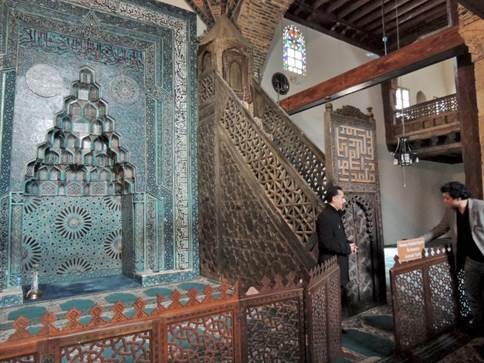
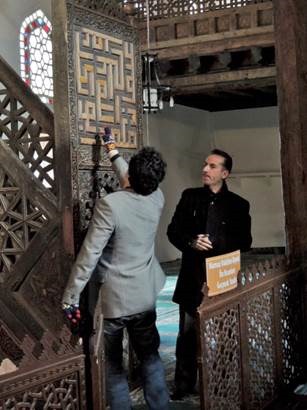
Taṣ had located and called the mosque’s cleric who graciously agreed to give us a tour. We learned that the entrance way to the side   He also later sang some of the prayers for us and his voice was really sweet. 

“Near the front of the worship space is a structure called the Minbar, the raised steps from which the imam delivers the sermon at the Friday prayer. Near the Minbar stands a roofed niche called the Mihrab. This nook indicates the direction of the Ka’aba, the cube-shaped building in Mecca that is the most sacred site in Islam. All mosques are built facing the Ka’aba, and Muslims should always face in this direction while praying.

The words of the Quran, the holy book that Muslims hold to be the words of Allah (God) revealed to the prophet Muhammad in the 7th century, are everywhere in the prayer hall, often in flowing Arabic script. The hall may also be decorated with intricate patterns running the length of the walls, pillars, ceilings and floors. Pictures or statues are absent, in observation of the warning in the Hadith (the sayings, actions or traditions of Muhammad and his companions that are not part of the Quran) that depictions of living things can lead to idolatry.” http://www.lifeslittlemysteries.com/791-inside-mosque-muslim-worship-allah.html


clip_image012

We learned that in the design were the Arabic letters for the word Allah.  And the entrance way to the Minbar is quite narrow so that anyone entering must not have over-indulged in food.  If you can see them, Taṣ is wearing some knitted gloves he bought from the local women selling their crafts just outside the mosque. 


clip_image013

The design represented the earth with the stars and solar system surrounding it.


clip_image014

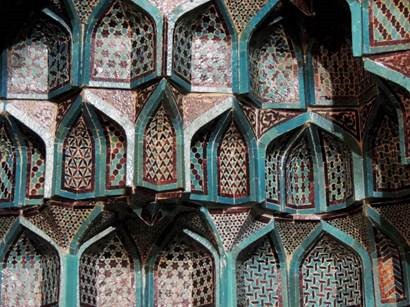
The beautiful blue ceramic tiles


From the Beyṣehir we drove on to Konya for lunch and to visit the home of the Whirling Dervishes

clip_image015

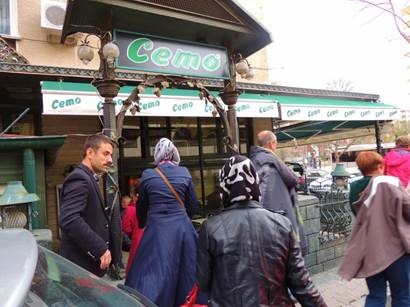
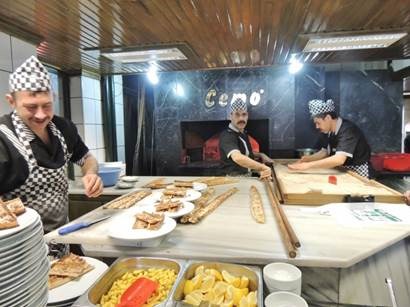
Where locals go for pide.


clip_image016

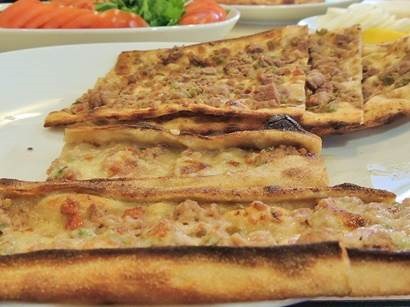
Pide is Turkish pizza!


clip_image017

I ate it all!

The crust is thin and crisp and dripping with thinly melted cheese and olive oil.  Or bits of grilled meat.  It was after 2 pm so we were actually quite hungry and dinner was a long way off in Avanos, Cappadocia.


clip_image018

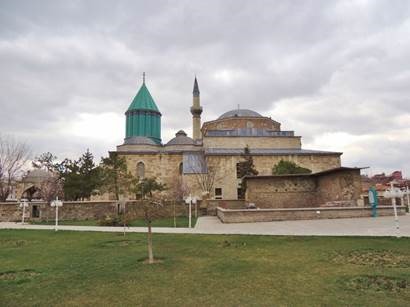
The turquoise tomb of M. J. Rumi founder of the Dervish order.


clip_image019

Waiting in line


clip_image020

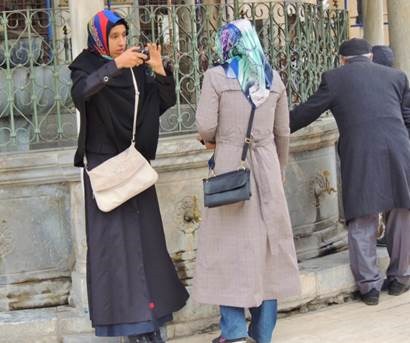
Headscarves are rare in Marmaris but quite common inland. 


clip_image021

Shops selling dervish memories. 


It was a quick stop in Konya.  Soon we were on the buses and off to Avanos our base from which we’d visit what we know as Cappadocia but what is called in Turkish Kapadokya.

Cappadocia trip Day 1

Merhaba,

  I think I could be a permanent vagabond.  Or maybe not.  Going to new places and seeing unique old architecture, strange and vast new geologic formations and sampling new foods broadens every horizon you have.  Finding hotels, transport, schedules etc..not so fun on a permanent basis.  I absolutely love letting someone else do the cooking and dish washing.  We arrived back in Marmaris about 7 pm last night and today went back to our regular schedule; laundry, listen to the morning NET, go to the Thursday market. 

  I am glad that we had this chance to visit Cappadocia.  I can’t imagine coming here to Turkey and missing it though we will miss lots of other spectacular areas especially in the eastern part of the country.  In a few weeks we’ll set off again to Ankara and surrounding areas where everything will be new to us.  This trip we revisited places from our motorbike trip but in doing so saw things we’d missed.  I loved the wildness of Sagalssos even in the blustery winds.  Cappadocia was a modern Fantasia designed by Georgia O’Keefe.  Lake Eḡirdir will always be a favorite memory. 

So here’s the story starting with Day 1 from Marmaris to Lake Eḡirdir

Ru

Cappadocia Day 1

clip_image001

We boarded the bus at 6:30 am with only a mild gray drizzle rather than the forecasted heavy rain and our weather luck held the whole trip.  Our first stop a few hours later was the West Café & Bistro in Gocek.  It was our second breakfast of the day so I went easy; Randal went for it all. 


clip_image002

www.westcafegocek.net

You can get a full American breakfast with bacon and eggs…or grilled cheese toast.  It’s a favorite café in a favorite cruisers’ bay.  Our pal Eve especially liked Gocek when she was cruising in Turkey.


Our overnight stop, Lake Eḡirdir was a day’s drive which was broken up by breakfast, a light lunch and several “comfort stops and a visit to Sagalassos and Isparta.


clip_image003 clip_image004

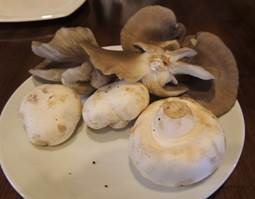
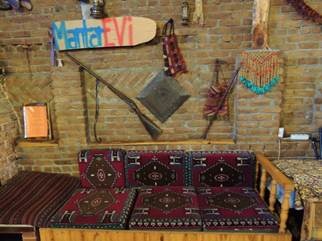
Marta Evi translates to the House of Mushrooms…. Our second stop of the day.

Finding spots that can feed 26 people quickly with good and also interesting food, means short stops between eating or sometimes long stops between eating.  Our first day had short stops so no one was overly hungry when we arrive here about noon after the stop in Gocek.  That, of course, did not stop us from eating. 


clip_image005

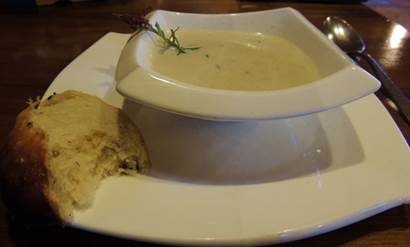
Mushroom soup with mushroom bread!

Soup and bread were delicious.  The soup was garnished with a lovely sprig of rosemary.

clip_image006

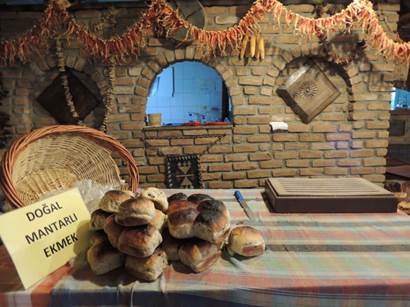
Natural mushroom bread..we would call it “homemade” mushroom bread which is bread with bits of mushroom in it


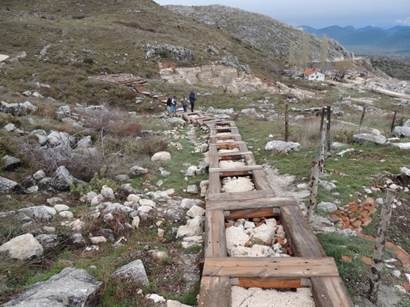
So now that we’d eaten our way along it was time to stop and work it off.  And what an amazing place to do that, Sagalassos. 

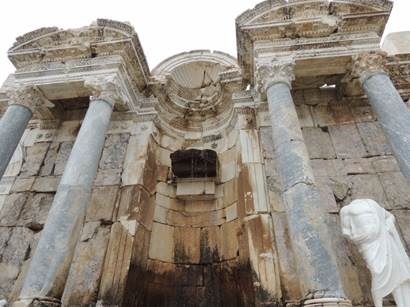
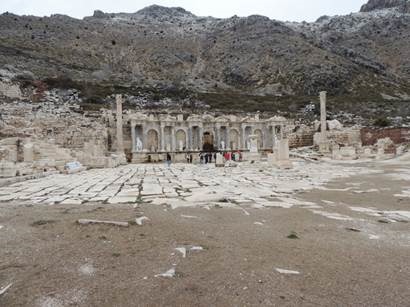
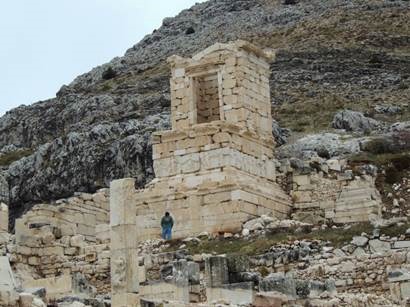
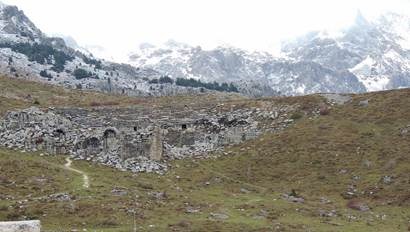
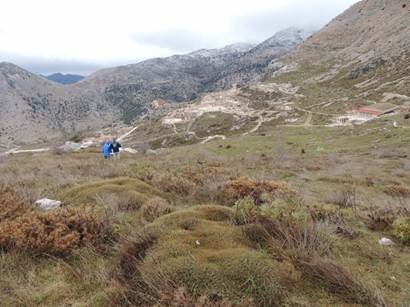
“The archaeological site of Sagalassos is located in southwest Turkey, near the present town of Ağlasun (Burdur province); roughly 110 km to the north of the well-known port and holiday resort of Antalya. The ancient city was founded on the south facing slopes of the Taurus mountain range and was the metropolis of the Roman province of Pisidia. Next to its mountainous landscape, a series of lakes form another typical feature of the regional geography. Today this region is known as the Lake District.” http://whc.unesco.org/en/tentativelists/5409/

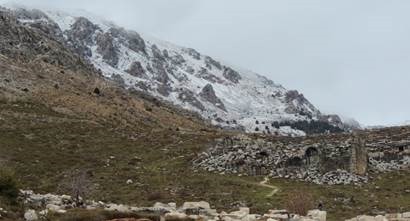
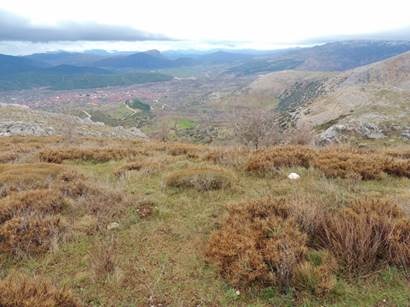
http://www.sagalassos.be/  also has lots of info too.  Both Internet sites can answer all of your questions about Sagalssos.  I just enjoyed walking around in the beautiful mountain setting.  It was cold, overcast, windy and just perfect!  The views of the valley and snow-capped mountains were breath taking in their starkness.  I love the wild open spaces, scrub, stone and dessert.  The only thing missing were sheep, goats and donkeys.


clip_image007

clip_image008 clip_image009

clip_image010

clip_image011

clip_image012

clip_image013

clip_image014 clip_image015

clip_image016

clip_image017

We made a very quick stop in Isparta for folks to purchase products made from roses. 

http://www.mydoramac.com/wordpress/?p=7352 tells the story of our first visit to Isparta and how an Isparta government official Bulent Akbas arranged with his friend the Mayor of Guneykent, Fahretdin Gozgun, a tour of the rose fields for us guided by a wonderful young man named Emre Yalcinkaya and an equally helpful Guneykent employee to drive us through the hills.  I totally recommend a visit to Guneykent for anyone interested in the rose industry in the Isparta area.


clip_image018

Taṣ and his friend who owns Kebapçı Kadir just near the clock tower in Isparta. http://www.kebapcikadir.com.tr/  which according to their web page has been in existence since 1851.

It was getting cold and damp so Randal and I skipped the shopping area for some tea.  In Lake Eḡirdir I was hoping to buy more of the cheapo rose cream I’d bought last time so skipped the rose shops in Isparta. 

clip_image019

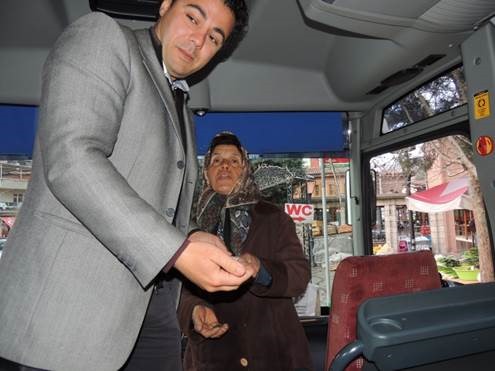
As we were leaving Isparta  this lady came aboard to sell dried rose petals.

The bag of of dried rose petals was only 5 TL so Randal and I bought one.  We like to buy local products when we can.  I had no clue what we’d do with the petals but that’s not always the point.  We just wanted to be supportive of this lady.  (Actually they are now sitting in the corner of our front head which should be a good thing.)


clip_image020

Our final stop Day 1 was Lake Eḡirdir, a favorite place from our 2011 motorbike trip.

http://www.mydoramac.com/wordpress/?p=7322 tells that story.


clip_image021

Dinner at a Big Fish Restaurant on the tip of the island where we ate locally caught perch.

clip_image022

A final photo before heading back to the hotel and a good night sleep as I planned to get up (and did) go for a 6 am walk through Eḡirdir the next morning.   That story next.


Cappadocia

Merhaba

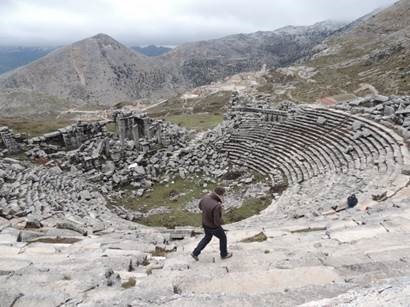
  We’re on day 3 of our trip and entering new territory for Randal and me.  We did stop in Sagalossos Friday and that is a magical place, the highest amphitheater in the world

“Sagalassos, its Great Theatre constructed at the highest altitude of any ancient theatre in the world,” and a most spectacular setting.

clip_image001

I’ve taken lots of photos, in Eḡirdir, and Konya and Beysehir, places I wrote about in July of 2011 on our motorbike trip.  Today is the first time we’ve been in the Cappadocia area so I’ll really take lots of photos. 

Ru

Cappadocia preview

Merhaba,

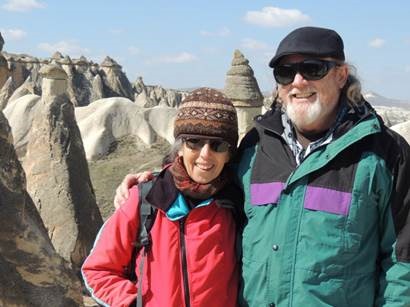
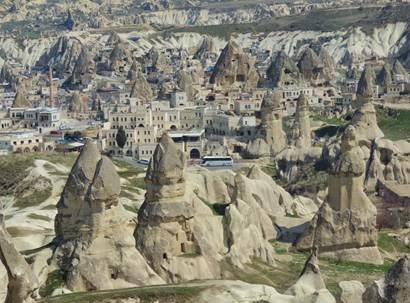
  It has been a full day and I’m pooped.  But here’s a couple of photos from Cappadocia.  It’s a magical place that Disney could have created and had us singing the theme from The Flintstones. You could spend days and days hiking around the amazing magic mushroom structures.  We just had a day to see the geologic and religious sides of the area.  Tomorrow we’re going back for more.

Ru

clip_image001 clip_image002

clip_image003

Trees, boats and pies

Merhaba,

  In a few days we’ll be heading off to Cappadocia.  In the meantime Randal is busy working to get us a new dinghy, finding someone to repair our SSB radio,  plotting a course to London and a zillion other things.  All that while baking really good pecan pies.  I’m doing my usual laundry, dishes, walks around town, some painting and knitting and planting saplings in the local national park just down the road.  Here’s the tree planting story as well as a visit to a wooden boat being rebuilt, and some photos from our St. Patrick’s Day Potluck Dinner.

Ru

Tree Planting

Gwen on KW received the following email from her friend Eva……..

"Hi Gwen, Spring has arrived & so have 250 pine saplings to be planted at the Kazim Koyoncu memorial forest!  (Kazim Koyoncu was a Turkish singer/environmentalist who died of cancer at a young age.) http://www.last.fm/music/Kaz%C4%B1m+Koyuncu

Imdat Avci (if you don’t already know who this is.. you will meet him!) started planting this forest in memory of Kazin Koyoncu a few years ago. Imdat  has organised 250 saplings & has prepared the holes for them to be planted.  All we have to do is put a tree in the pre-dug earth and finish the planting of it.

After the planting there will be a free BBQ & live music.

EVERYONE WELCOME!”

Eva

How do you get to this event?

The forest is on the Yalancibogaz road (AKA Yat Marina road), by the sea. Coming from Marmaris, it’s just past Albatros Marina. It’s a 10 minute walk from Netsel Marina.

This SUNDAY 17th MARCH from 12 noon.

PLANT A TREE – IT’S  GOOD FOR THE SOUL!

Attached is a photo of the sign, you can’t miss it!   "

Gwen

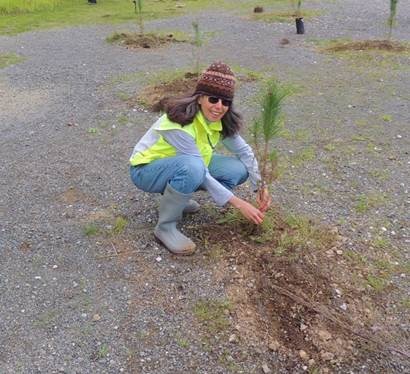
    Our pals Mary and Rick and I went off to plant trees.  When I was a kid we donated money to plant trees in Israel.  Sunday we actually had to do the work.  The event started at noon so we set off about 11:30 and got there just a few minutes early…a bit more than a 10 minute walk, but nothing a member of the Dead End Trail Hiking Club couldn’t handle.  We weren’t the first to arrive but we were earlier than most.  So we set to work and each planted about a half dozen trees before other folks came and soon all of the available holes were filled.  So while I don’t know if there were 250 saplings,  there definitely were not 250 holes.  But not to worry there were many volunteers and some actually had shovels so I’m sure all of the saplings had new homes before the barbecue began.  In the midst of the planting we stopped for a ‘Photo op” and TV News Interview.” 

clip_image001

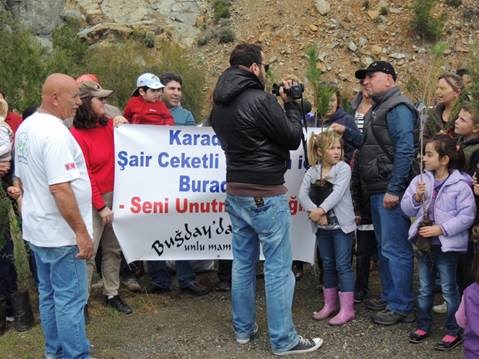
You will not forget the poet from the Black Sea ‘Children’s Jacket” here at this place.

That is a totally wild guess  except that I did find the following  “Kâzım Koyuncu 1972-2005 (Şair Ceketli Çocuk) “ and we were planting the saplings in the   Kâzım Koyuncu  Memorial Forest. 

The curved info on the bottom is the name of the local company providing the barbecue.   


clip_image002

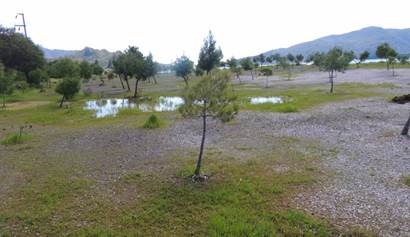
Trees planted in past years.


clip_image003

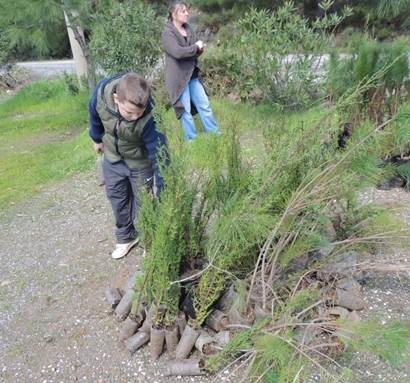
Saplings waiting to be planted.


clip_image004

One of “my” trees.

You picked up a sapling, found a hole, peeled the plastic casing from the sapling’s roots, put the sapling in the hole and then pushed the dirt back in with your hands hoping not to encounter any creepy crawlies never mind glass shards.  I should have thought to bring gloves


clip_image005

Mary and Rick with a planted sapling.


clip_image006

Preparing for the “TV” segment.


clip_image007

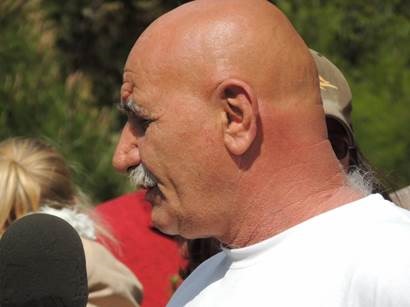
Imdat Avci   http://www.todayszaman.com/newsDetail_getNewsById.action?load=detay&link=151719

“İmdat Avcı is a one-man environmental movement, sailing the high seas in the Marmaris area, where he cleans up trash wherever he finds it. This mission is his passion and his life’s work.

Once a careless user of the natural world, a traumatic experience in his 30s converted him into an eco-warrior, and now he tirelessly scours the highways and waterways of Muğla and fights inefficiency, waste and animal cruelty wherever he finds it.”


clip_image008

Mary stepped forward to help hold the sign.


clip_image009

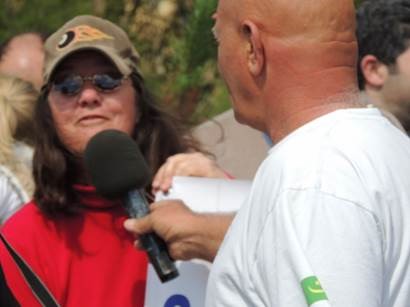
She also was brave enough to speak on camera and said all the right things about being happy to take part in this local environmental event. 


clip_image010

Whole families took part in the tree planting.


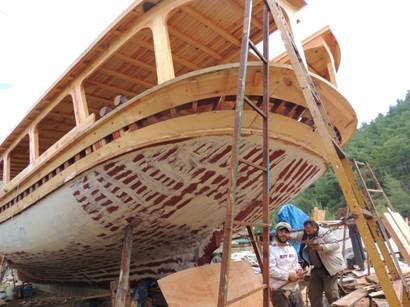
By 1:30 we’d helped fill all of the available holes.  Lots more volunteers were arriving, some carrying spades to actually dig more holes; so we waved good-bye and started back to the marina.  As we were passing Albatros marina, we heard someone call out to us.  It was Joan, an x-pat we’d met several times in the past few months.  She asked if we wanted to see her friend Hassan’s wood boat.  There had been a horrible fire just a year ago and he was in the process of rebuilding her.  We said yes and joined her to go meet up with Hassan.


clip_image011

Hassan on the right (hatless) with his helper.


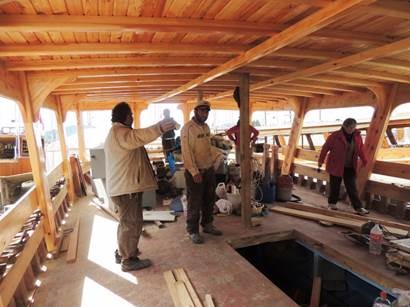
We were invited aboard.  I said no as I hated ladders.  Hassan, Joan, Mary and Rick went up the ladder. As I hate wimping out even more than I hate ladders, Mr. Helper walked to the stern of the boat with me and I climbed an even steeper ladder to the top and then he just took my hands and hauled me onto the boat.   I did warn them that climbing up was 10 times easier for me than climbing down so I would be there until the boat was put back into the water and I could step off onto the dock.


clip_image012

Hassan giving us the tour.

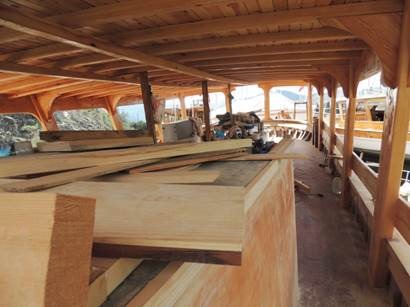
Her name is Panorama and she is due to be back in operation by the end of March.


clip_image013

She will be beautiful once again.


clip_image014

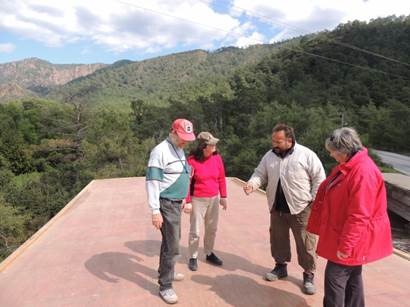
Rick, Mary, Hassan, Joan on what will be the sunning deck. 


Well I did manage to climb down the front ladder which had some really big spaces between the rungs.  I do hope we get to see Panorama when she is back in the water.  


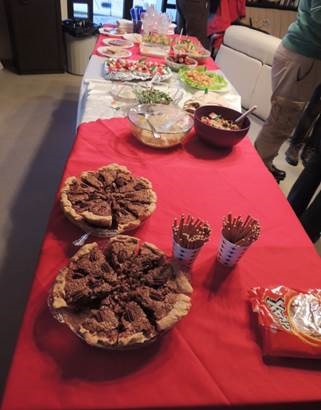
Then it was back to the boat where Randal was slaving away making 2 pecan pies for the St. Patrick’s Day Potluck Dinner.  Pecan Pie is Southern, not Irish, but no one was complaining and both pie plates were empty by the end of the night. 


clip_image015

Randal’s pecan pie with the incredibly flaky crust!

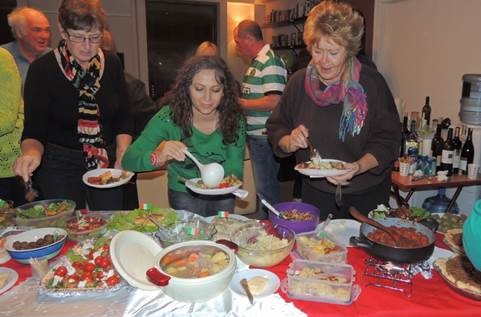
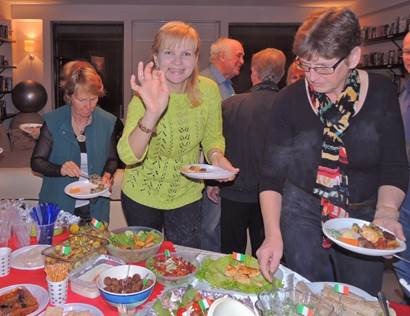
Everyone brought a dish so the table was soon crowded with dishes of food.


clip_image016

Sampling the Irish and not so Irish dishes.


clip_image017

Irina thnks the food is just perfect!


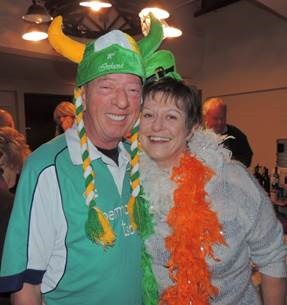
clip_image018 clip_image019

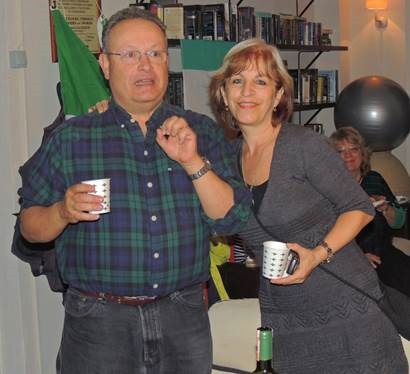
Kellys all….     Ned and Barbara                                           Ed and Sue


clip_image020

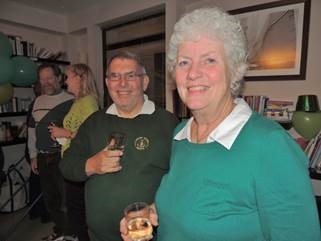
Lee and Zehra celebrate her birthday and their 19th anniversary.


clip_image021

Cute!


clip_image022

Cuter!

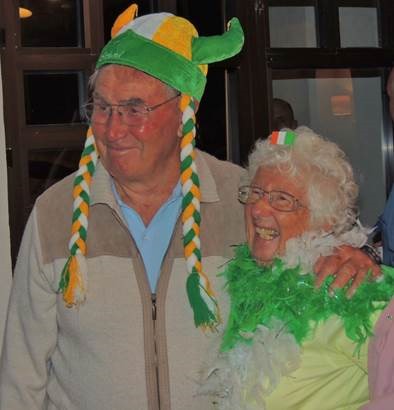
Bill and Joan.  On her next birthday she’ll be 88 years incredibly young!!!


clip_image023

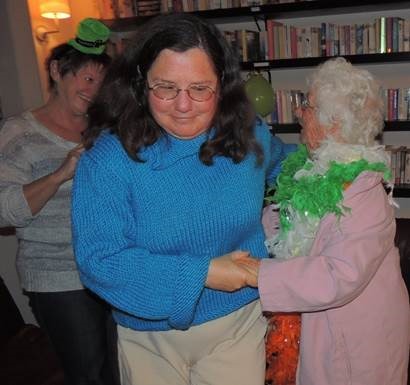
Mary in her brand new sweater that she knitted in Wednesday Group  dancing the jig with Joan.

Upcoming trip to Cappadocia

Happy St. Patrick’s Day

Merhaba,

  It’s a bright sunny day in Marmaris which is a good thing as power is off from 7 am until 1:00 pm today for maintenance.  Randal has a fire going in our diesel heater making it quite cozy.  We’re skipping the Sunday Market this morning, too much else to do today.  At noon there will be a tree planting in the local forest.  Holes have been dug; we just have to put in the sapling and fill in the dirt.  This is an annual event and something I’ve never done before.  This evening is a St. Patrick’s Day Pot Luck at Sailor’s Point.  Randal is making pie which makes everyone happy for 2 reasons.  Everyone likes his pies and no one particularly every cares for what I bring though Jane said she really liked my banana bread and fruit tray from the previous pot luck.  Randal likes to cook; I don’t; so it all works out.

   On the 22nd we’re leaving for a 6 day “Gwen Trip” up north west.  It somewhat retraces the motorbike trip Randal and I did back in 2011.  But many of the stop included will be new to us, particularly and especially Cappadocia.  It will be a small group led by our intrepid guide Taṣ and our pals Mary and Rick are going as well.  Really looking forward to this as Cappadocia is one of those special places in Turkey not to be missed.  We skipped it on the motorbike as it was just too far for the amount of time we’d had. 

  So here’s the itinerary.  Look up all of those places and give me your questions ahead of time so I’ll be able to answer them….maybe.

Ru

Ps   The US did not make the World Baseball Classic  but The Netherlands did.  Does that make sense?

Cappadocia  http://www.cappadociaturkey.net/

Day 1:  Board bus at 6:30 am.  (Set several alarms!)   Breakfast stop in Gocek around 9:30 am.  Stop in Sagalassos (Hittite period 16th century  B.C.  In 333 Alexander the Great conquered the city.  http://interactive.archaeology.org/sagalassos/  Later Roman rule increased its prosperity.  Isparta for lunch time/free time.  Lake Eḡirdir stop for the night at the Altingol Hotel. 

(During our 10 day motorbike trip back in 2011 Randal and I made a too short stop in Isparta but did stay 3 nights at Lake Eḡirdir.  We are looking forward to returning to both places.)

Day 2: Drive to Konya.  Lunch.   Konya Mevlana Musuem, Selimiye Mosque.  Check in to Avrasya Hotel in Avanos.   

(Konya was also a stop on our 2011 motorbike trip but we’re happy to return here also.  But we’ve never been to Avanos.   “ Avanos, is a town and district of Nevşehir Province in the Central Anatolia region of Turkey, located 18 km north of Nevşehir, the capital city of the province. It is situated within the historic and touristic region of Cappadocia.” Wikipedia

http://www.ozgurguker.com/Turkey/Avanos-Cappadocia-Pottery-Turkey.html  Apparently Avanos is famous for its pottery.  I might not be able to get Randal away from here as he missed out on his set of pottery dinnerware in North Cyprus.

Day 3: Love Valley (secret  … we’ll all have to wait to be surprised) Goreme Museum, Lunch in Uranos Cave Restaurant  (I can hear you laughing) Avanos, Cavusin Village, Pasabagi Fairy Chimneys. http://www.goreme.com/pasabag.php   Optional Turkish Night.

Dav 4: Optional Balloon Flight.  (I rode in a hot air balloon one time and lived through it and am not pushing my luck.)  Derinkuyu Underground City. 

http://www.goreme.com/derinkuyu-underground-city.php         Lunch in Village Restaurant , Soganli Valley.  If time permits Nevṣhir.

Day 5: Arrival in Antalya.  Visit Sultan Han caravanserai and check into Hotel Suitelaguna.  Dinner in hotel.  Optional Aspendos Tour.  www.suitelaguna.com

Day 6: Antalya Old City tour, Hadrian’s Gate, etc  Duden Waterfall and more.  Return to Marmaris.

Akayaka for lunch

Merhaba,

   From Karacahisar we drove to Akyaka for lunch.  Here’s the story.

Ru

“Something about Akyaka”

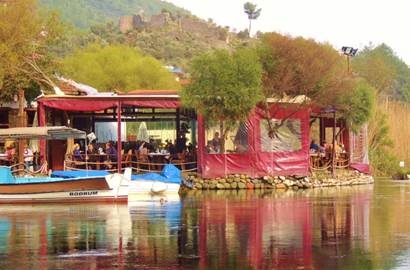
Deena and TK promised there would be fish restaurants in Akyaka; we stopped  at one of their favorites.

clip_image001

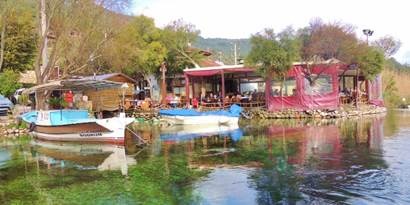
A fish restaurant exactly where it should be!

Azmakkapı Orfoz Restaurant   Azmakbas  Akyaka, Muḡla              

clip_image002

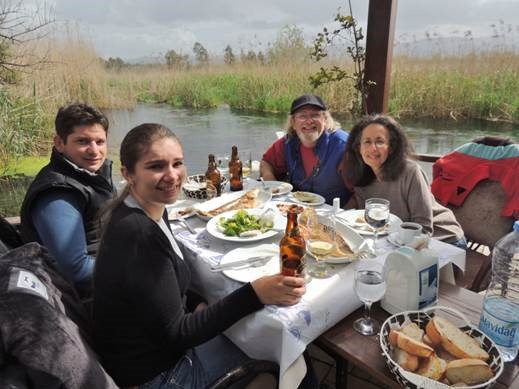
Lunch by the  Kadın Azmak   (‘Woman River`)  TK Deena, Randal and Me

According to my dictionary nehir or irmak translates to river.  Azmak translates to get wild or be in flood. 

“The word "azmak", sometimes used to describe a river, means "running wild" in Turkish, in a reference to the stream’s strong, rather than violent, current, especially in winter. Akyaka’s azmak is also referred to under the fuller name of "Kadın Azmak", qualifying it with female attributes and distinguishing it from azmak of Akçapınar at the opposite side of the same plain, or from namesakes in Gallipoli Peninsula or Bulgaria”.  http://en.wikipedia.org/wiki/Akyaka,_Mu%C4%9Fla

“Akyaka is situated in the province of Muğla, in the southwest of Turkey, at the eastern end of the Gökova gulf, between Marmaris, Muğla and Bodrum. The number of inhabitants amounts in the winter to approximately 1500, in the summer it almost doubles. Its delightful position at the end of the Gökova Gulf, bordered in the north by the almost 1000m high Sakartepe, in the south by the wetlands of the Gökova plain ("heaven’s plain") with its multitude of species, particularly water birds, takes the visitor into its spell.

Being a settlement even in antique times – there are plenty, though not very important remains- the village of Akyaka lead an existence as a fishing village, off the roads, with a little of agriculture.

In the 1970’s Akyaka was "discovered ".

A meager tourism developed, consisting mainly of locals and some "refugees" of the big Cities, seeking unspoiled nature and the refreshing summer climate with a constantly blowing sea breeze. Slowly Akyaka developed into a summer residence for wealthy holiday guests from Istanbul,   Ankara and Izmir.

The tourist boom, beginning in Turkey in the 80’s and persisting until today, did not ignore Akyaka. Still most of Akyaka’s visitors being Turkish, the number of European tourists is increasing.

The main attraction for most of the visitors is the natural beauty of Akyaka, with a multitude of species in the wetlands, among those the nearly extinct European Fishotter(lutra lutra), during the winter months different types of herons, flamingos, even migrating pelicans can be observed with some luck. Since some years paragliding from the height of the Sakartepe, the "local mountain" of Akyaka, down to the plain became quite fashionable. The launch site is sufficient, but not easy for beginners.

The fish restaurants on the bank of the crystal clear " Kadın Azmak"(‘Woman river`) where freshly caught fish is perfectly prepared and served, are very well known by gourmets throughout turkey.

http://www.akyaka.org/akyaka/akyaka_e.htm

clip_image003

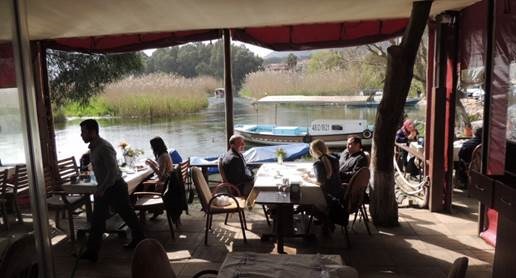
What a setting!


clip_image004

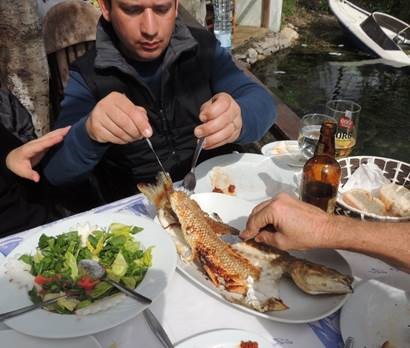
That piece was half the fish!  It was shared by TK and Randal and Deena and I shared a piece the same size.  We had meze, salad, bread and that wonderful grilled sea bass.


clip_image005

Deena pointing to the motor on the half-sunken dinghy which is the only dinghy in Turkey in worse shape than ours.


clip_image006

The restaurant, just a bit out of town center, seemed a popular place where you could watch the small boats giving river tours.   Ducks and geese swim by hoping for handouts.  Deena and I fed the ducks and geese.  They would take the bread from your hand…if you were brave enough to hold on to it as they grabbed for it.  Sometimes I was and sometimes I wasn’t. 


After lunch we drove into the village and went for the boat ride up the river.

clip_image007


clip_image008

Deena


clip_image009

TK


clip_image010

Several small restaurants dotted the river bank


clip_image011

Looking down into the crystal clear river was like looking into a huge aquarium of fish, turtles and river grasses. 


clip_image012

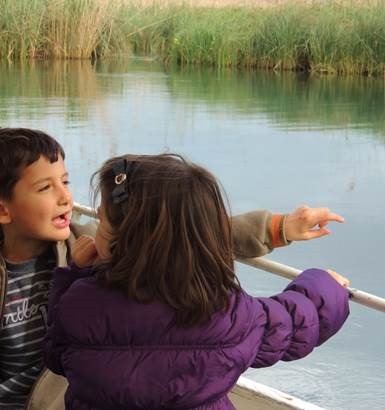
This young boy and his sister seemed to enjoy the ride.


clip_image013

Our lunch restaurant was the turn-around point of the river ride.

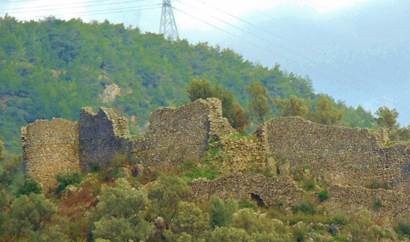
See the ruins of something on the hills behind.


clip_image014

“Being a settlement even in antique times – there are plenty, though not very important remains.”

But they were impressive to us.  The tower in the distance distracts a bit from the ‘antique.”


After our the ride we walked around the resort area a bit.  It was in the process of being renovated which seems to happen to many hotels in the area during the winter.

clip_image015

TK and Deena


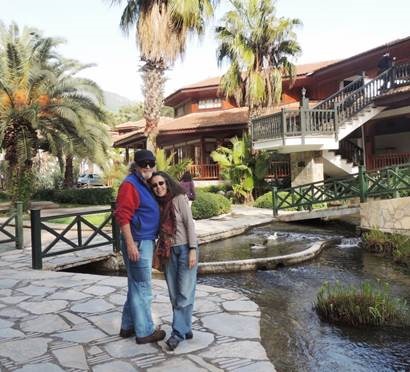
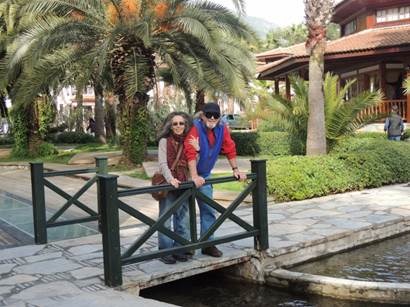
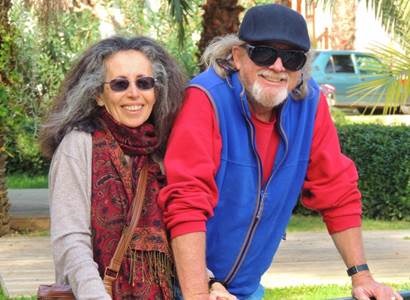
Some photos of Randal and me taken by Deena.

clip_image016

clip_image017

clip_image018

Great photo!


clip_image019

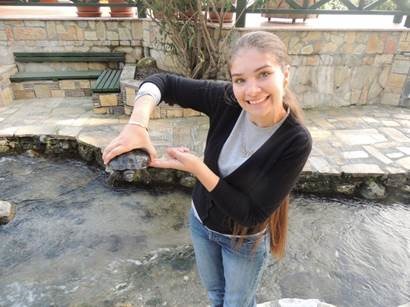
This turtle was struggling to climb out of the stream onto the stone walkway.  Deena helped him out and then he plopped himself back in!


clip_image020

Deena pointing out where we’d just been.


clip_image021

She obviously wanted a belly rub

clip_image022

Deena obliged


clip_image023

This beach is probably quite crowded during the summer. 

It is possible to take a bus from Marmaris so maybe we will one day again before we leave Turkey.


Carpets Redux Karacahisar Village

Merhaba,

  DoraMac is starting to look like a carpet showroom with rolled carpets stacked in the front cabin.  But these aren’t showroom carpets.  They are carpets from two women in the small village of Karacahisar.  Here’s the story.

Ru

DoraMac

http://www.mydoramac.com/wordpress/?p=6794  is where this story all began in May of 2011 during our first visit to Turkey.

http://www.mydoramac.com/wordpress/?p=13462  is the second part which took place December 2012.

This is the final installment of our story about the “carpet ladies” of Karacahisar village.

Randal had a carpet made by one of the carpet ladies of Karacahisar.  This past Sunday, our friends Deena and TK returned with us to collect the finished carpet. 

clip_image001

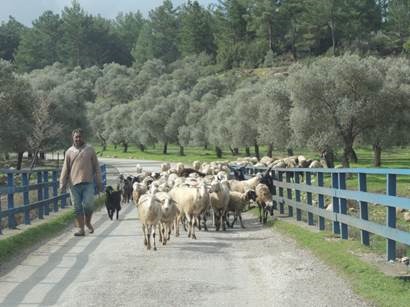
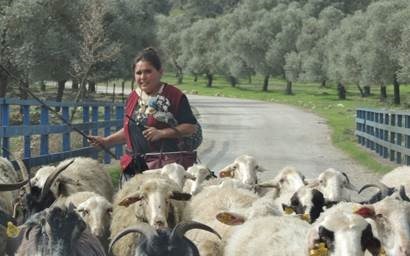
Just as our previous visits to Karacahisar, we were stopped at the bridge by a herd of goats.  We love this!

clip_image002

clip_image003


clip_image004

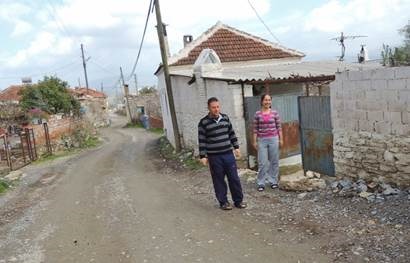
There are about 3 streets in the village but we got lost finding Sebile’s house.


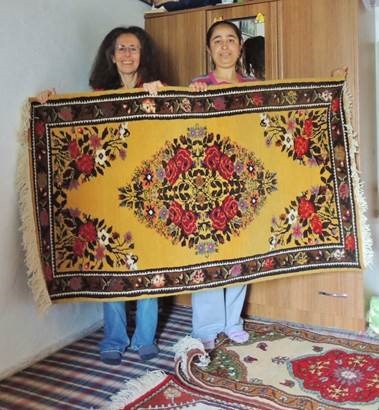
While we were there we noticed a carpet that Sebile had woven and both Randal and I really liked it.  We were particularly taken by the lovely golden color of the wool.

clip_image005

This is a wool on wool carpet that will last past our life time.   Randal and I loved the gold color which comes from a “corn flower” boiled for the dye.  The browns come from walnuts.  The red, green, and black are chemical dies.   Some of the yarn came from  Sebile’s sheep and some from her neighbors’ sheep.  She spun, dyed, and then wove the wool into this carpet. 

Prior to the mid-19th century, many of the weaver’s color choices were dictated by the availability of certain plants in their region or what could be obtained by trade.  Before the seminal year of 1860, when chemical dyes first arrived on the scene, plant based dyes were all that were available. These dyes are called vegetable dyes or natural dyes and have a distinct look about them. They age beautifully, work harmoniously together and the indigo dye, which creates all the ranges of blue, even preserves the wool. Usually with vegetable dyes one can observe a slight variation in the color itself. Also affecting this is the type of wool being used and how it was spun. Hand-spun wool, being less perfectly formed, will accept the colors of the dyes at different rates of the same shade and will show more variation in color than machine spun wool. Deeply saturated wool will also show less color variation which will only appear after the rug begins to age. This variation of color is termed "abrash" and adds a certain artistic quality and charm to tribal rugs which is often highly regarded.  http://www.nhrugs.com/vegetable%20dyes.html


clip_image006

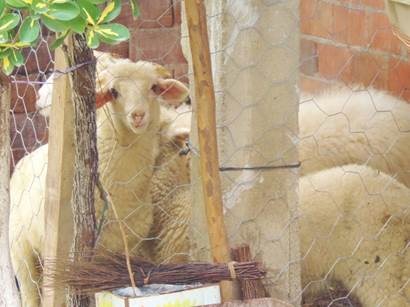
The sheep!


clip_image007

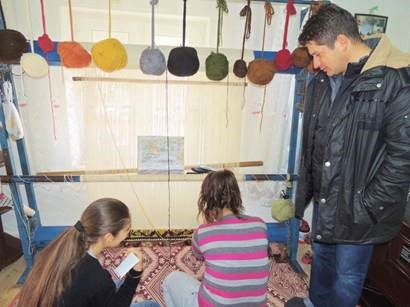
A similar carpet in progress with the pattern as a guide.


clip_image008

Showing how it’s done; TK in particular was quite fascinated….maybe a retirement hobby.


clip_image009

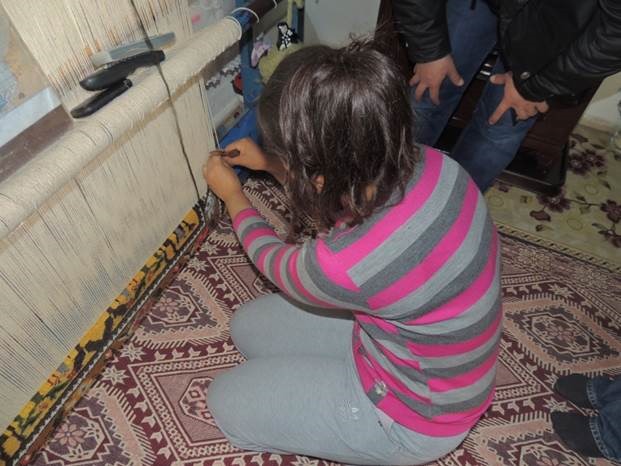
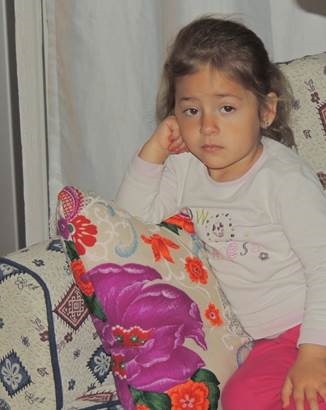
Sebile’s daughter kept her “poker face” our entire visit.  Perhaps a future weaver; perhaps not.  One day she took a scissor to her mom’s carpet in progress but thankfully it could be repaired.  I was that kind of a kid only I took the scissor to my hair just before I was to have a set of photos taken.  So only my sister has a set and not me.


clip_image010

Randal never stopped smiling all day! 


When we left Sebile she gave a huge bottle of her homemade olive oil to Deena and me.  Randal had made one of his famous walnut pies for the two carpet ladies Sebile and Gülümser to share.  He gave both women a huge jar of corn syrup and the recipe for walnut pie translated into Turkish by Deena and TK. 


From Sebile’s house we drove the 2 minutes to Gülümser’s house.  We had been there twice before, once in May of 2011, by luck and once in December to order a carpet.  Gülümser was busy with other carpet orders and the olive harvest so asked if Sebile could make it for us with the pattern Randal had admired.  I think I heard them explaining to Deena and TK who translated for us, that they were the last two women in the village with the skills to make carpets.  We had once learned that Turkish carpets have double knots


clip_image011

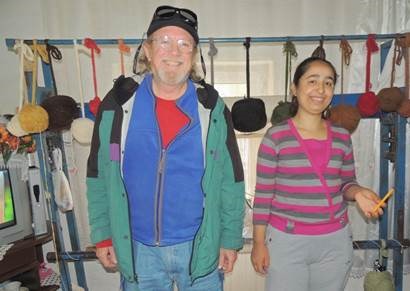
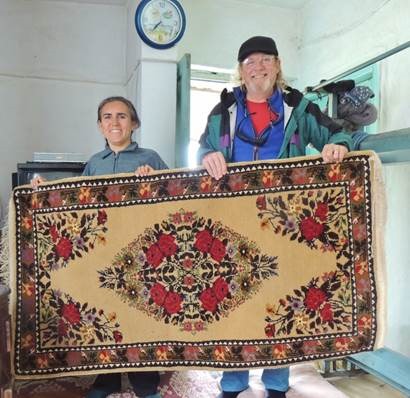
Gϋlmser and Randal with the carpet we bought from her!

It’s very similar to Sebile’s though the background colors are different.   Many people buy two of the same for either side of the bed, but we wanted one from each lady.  Not sure where we will use them, but they will always remind us of the “carpet ladies of Karacahisar. 


Medalled Milas Carpets

Yet another group of Milas carpets and rugs, this time distinguished on the basis of their initial conception, are the ones referred to as "medalled". Their prototype has appeared in the village of Karacahisar near Milas, and this village and its vicinity is still producing carpets and rugs based on the same pattern, which are also called Karacahisar carpets and rugs, considered inside the category of Milas carpets and rugs. Instead of the niche and the alem placed in the fore as in the prayer rug tradition, Karacahisar carpets and rugs are characterized by a centrally situated and larger field called "belly" ("göbek") with medal-like designs around, as well as abstract patterns of leaves and branches which are woven along the sides of the carpet. They are woven on a bed of white and red, regardless of the proportion these colors may occupy at the final stage of the finished product. Prayer rug types are usually woven in a tighter manner, and Karacahisar carpets and rugs looser.

Colors

For the final colors, brown, peculiar tones of reddish brown and of a very dark yellow are distinctive tints of Milas carpets and rugs. Wool has established itself as the main material for Milas rugs as of the 18th century, and the natural dyes are still widely used. Although industrial dyes of our day can more or less fully replace the savour and resistance of naturally obtained dyes, natural dyes will mature in the same manner as traditional rugs.

   The yellow is obtained from leaves of peach and apricot trees, the distinctive reddish brown (which is also frequently encountered in artefacts dating from the Carians, the inhabitants of the same region in antiquity) from Erica vulgaris, the brown from walnut leaves, the very dark, brownish yellow from acorns, the green from mint, and the wool is blackened by leaving it in the ground for a week.

http://en.wikipedia.org/wiki/Milas_carpet


MİLAS – Considered valuable cultural items and famous beyond the borders of Turkey, Milas’ trademark carpets are about to be saved from becoming a dying craft. Merchants complain that the number of producers is decreasing and the existent ones use factory fiber instead of traditional threads. Local authorities take a stand to protect the carpets

The state administration and the municipality of the Milas district of Muğla are collaborating to preserve the tradition of Milas carpets for the next generations.

Milas carpets are considered valuable cultural items and are famous beyond the borders of Turkey. The merchants who sell original Milas carpets have complained that the number of carpet-producing villages is decreasing and the existing ones use factory fiber instead of the traditional threads.

Türel Buldan, a 64-year-old owner of one of the district’s well-known carpet stores, said the exact history of carpet production in Milas was unknown but a prayer rug from the 17th century, at the Turkish and Islamic Arts Museum in Istanbul, is labeled the oldest known Milas carpet. Buldun said there were 40 motifs unique to Milas. "The most famous is the one called ’Adalar’ (Islands). The carpets are woven by Turks from İstanköy, Creta and Rhodes. ’Ada Milas’ is the carpet’s name," he said.

Similar to natural dye

Buldan said factory-created wool fabrics that have similar colors to natural dye from plant roots are mostly preferred these days and only the villages of Karacahisar and Bozalan follow the tradition of using naturally dyed wool. Only a small number of the carpets that are woven and sold in Turkey are original Milas carpets, according to Buldan who said nearly all of the carpets sold outside of Milas are lower-quality productions woven in the villages of Isparta, Afyon, Burdur, Balıkesir and Kütahya provinces. "Those carpets are far from natural, and not original," Buldan said, adding that the imposter carpets were being sold at the same price as the originals.

"I want people who weave carpets with naturally dyed wool to earn more. A carpet takes two months to complete," said Buldan. He said the weavers’ profit is laughable compared to today’s salaries. According to Buldan, the low pay is another reason that carpet weaving is a dying art. He said a cleaning lady makes more money than a carpet weaver and weaving is similar to a hobby now. "There are carpet-weaving stands in 80 of the 114 villages of Milas. The stands are there but the number of villages where carpets are being woven is decreasing rapidly. There are approximately 20 villages in which carpets are woven," said Buldan.

Milas district’s local administrator, Şahin Aslan, said a project for preserving the carpets of Milas is being prepared by the Milas Girl’s High School. The project aims to prevent the degeneration of carpets while preserving their originality and improving their status by offering reliable information to consumers. The local administration of Milas, Milas Municipality, Muğla University, Milas Sıtkı Koçman Vocational School of Higher Education, Milas County Directorate of National Education, Milas Chamber of Commerce and Industry, and Ildız Carpet Farm are all supporting the project.

"In order to actualize the project, the collaborators met with weavers and tried to figure out each and every quality of the Milas carpets. The carpets are going to be labeled as Milas carpets only if they meet the standards. Therefore, the buyer will not hesitate about whether a carpet is a real Milas carpet or not, and the weavers will make the deserved profit," Aslan said. They are working on a historic building to be transformed into a showroom for Milas carpets, he said. Milas Mayor Muhammet Tokat said the Milas carpet was not a product in their eyes. "For us, each and every one of our carpets is a cultural envoy," he said. The mayor said steps must be taken for the international production of the Milas carpet. A carpet museum is in the works and training courses are to be opened to preserve the genuine Milas motifs, according to the mayor.  http://www.hurriyet.com.tr/english/domestic/11628135_p.asp


We said our final good-bye to Gϋlmser and drove off happily with our carpets.  Gϋlmser had served us tea and some tiny nuts that tasted like pistachio mixed with pepper and looked like peppercorns.  That was just enough to hold us until our lunch stop in Akyaka for some grilled fish.  It was a wonderful lunch in an incredibly picturesque town.  That story next email.


Food, Drink, Spring Flowers, New Friends and Buttons the Dog!

Merhaba,

   Randal arrived safe and sound yesterday about 10PM.  He was up early this morning finally crashing out about 5:30 this evening.  Rhino Randal and I are happy to see him home.  As for this particular email, the food I ate was necessary for the story, but not the most interesting part.  How the food came to be and the culture surrounding it is really the star of the show.

Ru

clip_image001

Feta Cheese Salad at Kırçiçeği   http://www.kircicegi.com.tr/en/index_en.htm

Ordinarily I’m not a feta cheese fan, but this was really good, not overwhelmingly salty at all.  Just a really rich taste reminding you that cheese comes from milk.  And the salad contained lots of arugula, the nutty/peppery leaf called roka here in Turkey .  A great deal of “white cheese” is eaten here for breakfast: I know I ate a ton when we traveled through Turkey on our motorbike.  It’s great on bread with strawberry jam.  I never would have thought of it as feta.  I always call it “white cheese” and ask for the kind with less salt.

“White cheese, commonly known as Feta cheese in the West, is mainly produced in the Marmara (Area around Istanbul) Region, is consumed in abundance. It can be produced out of sheep or cow milk, but the production techniques may change according to region. White cheese needs 90 days to mature in salt water. High fat content white cheese is soft and smooth whereas low fat versions are harder. It is an essential part of Turkish breakfast and used in börek.”  http://www.turkishculture.org/culinary-arts/cheeses-312.htm

  While in North Cyprus I read about Turkish Hellim cheese vs. Greek Halloumi and the cultural clashes over who really created this particular cheese with the rights to call it by a specific name.  Apparently there are Feta cheese wars also.    The following information comes from students in a history course at Cornell University.  Part of their study of inter-European history was the study of some foods associated with different countries.

“The Feta Cheese Dispute

Issues of Regional Identification Involving EU Regulations and “National” Brands of Food

by Mike Peluso, 11/20/2005

  Introduction

There has been an encouraging degree of cooperation in recent years among European countries, and it appears that the EU has helped to create a more defined sense of a truly "European" identity. The spread of ideas and culture has become more apparent than ever before. However, despite the recent successes of the EU, it has not gone without controversy. Specifically, a number of conflicts over food have emerged in the past few years. Despite the increase in cooperation, it has become apparent that there are still strong regional and national identity issues among many Europeans. In some cases, these national disagreements have extended to different types of food and the question of which culture they belong to. Feta cheese is one prime example, and it has been battled over by Greece, Denmark, and Germany, among others. The long-running disagreement over this cheese shows that cultural and economic concerns are still extremely divisive elements within the EU.

Feta cheese.

Feta cheese is a brined cheese that is made from goat and sheep milk. It is unclear exactly when it began to be produced in Greece, but it is discussed in several ancient Greek sources. For example, the Cyclops in Homer’s The Odyssey prepares a cheese from sheep’s milk that is believed to be feta [4]. Within Greece, feta has been produced in much the same way for thousands of years. The unique climate of the Greek mountains is believed to give feta cheese its distinct taste, with the main ingredient coming from sheep and goats that graze in the area. Greek producers have strict regulations regarding feta, including the stipulation that at least 70% of the product be made of sheep’s milk. The remainder can be made of goat’s milk, due to the difficulty in obtaining large quantities of sheep’s milk. It takes about an hour for the milk to coagulate, and then it is cut into large cubes. These cubes are packed away into barrels and refrigerated for about two months [5].

The interesting thing about feta cheese is that it continues to develop as it ages, much like fine wine. It will taste differently depending on how many months it has been allowed to age. The Greeks have been regulating this process since 1935, and their firm tradition ensures a cheese with a strong, salty taste. Other producers, like France and Denmark, often use cow’s milk in the process, and they may use coloring agents that Greek producers strictly prohibit ].” https://courses.cit.cornell.edu/his452/fetawars.html#history

Selap at MADO

clip_image002

Salep, a beverage from wild orchid.

My order of salep took a while to come; longer than Mary’s coffee, but it was worth the wait.  You sprinkle the chopped pistachio nuts and tiny raisons on the top and then sprinkle it with cinnamon.  The tiny pastry had more chopped pistachio in it.  This was my first ever Salep. 


clip_image003

Nestle version which can’t possibly compare to the wonderful stuff at MADO.


Salep  http://www.wittistanbul.com/magazine/salep-and-boza-history-and-recipe-of-special-turkish-winter-drinks/

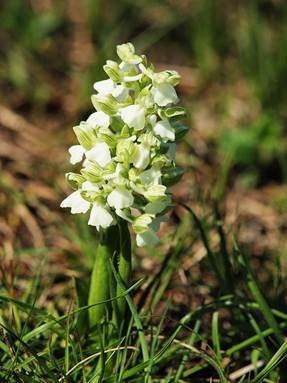
A wild orchid, the basis of salep.

clip_image004

Orchids have fascinated mankind for more than 3000 years, not only with its aesthetic beauty but also with its medical might. The idea of making a drink out of this enchanting flower belongs to Turks, thanks to their religious belief. In the 8th century, Turkish people converted to Islam. According to the belief, they are not allowed to drink alcoholic beverages. So they came up with the idea of salep, a hot milky drink to warm you up during the cold winters.

Tubers of wild orchids are washed, boiled, dried and finally grinded into flour. This is the essence of this soft and warming, but also medical drink. The healing power of salep comes from glucomannan, which heals respiratory problems like bronchitis and cough.  It empowers the heart and the mind, stops diarrhea and warms up the body. Especially if it’s consumed with ginger and/or cinnamon, its effect is amplified.

(Last night I mentioned over the VHF radio that I wasn’t feeling great: my throat was sore and I was tired.  I wanted to explain why I wouldn’t be at Neighbors Restaurant to help celebrate Rick’s 63rd birthday.   Someone in the marina office heard what I said and had the Pineapple Restaurant  send over some warm Selap.  I hadn’t known they were doing that so tried to send the Pineapple guys to another boat.  It took 2 calls to the marina as well as the marina manager coincidentally walking past to get it all straightened out.  That was very sweet and I do like my salep!”)

Where to Find Salep

    This precious flower grows almost everywhere in Turkey, and there are lots of varieties. Yet, some varieties are facing extinction. To get 1 kilo of salep flour, more than 1000 orchid tubers are pulled out of the soil. And it takes up to 7 or 8 years for the orchid’s tubers to grow sufficiently to use for salep production. Therefore, export of salep is prohibited. However, instant versions with salep flavor are exported.  (I paid 6.50 TL for my Salep which is about $3.75.  Given what it takes to make salep you would think it would cost more.)

[In Istanbul] the two common places to drink a nice warm cup of salep are Emirgan Sütiş (Sakıp Sabancı Caddesi, No:1/3; Emirgan, Sarıyer) and Öz Süt (İstinye Park AVM).

Home-made Salep

   It is easy to make salep at home … as long as you can get the salep flour. For six people, mix 2 tea spoons of salep flour with 2.5 tea spoons of sugar. Slowly add 3,5 glasses of cold milk, and stir. Finally boil the mixture while stirring on low fire for 10 to 15 minutes. Serve hot in a cup dusting with grinded cinnamon, nutmeg or ginger on top.  (Not your calorie free Diet Coke, but less than ½ tsp of sugar per person, at least in this recipe.  Not sure about the Mado version.)

Instant and Ready to Drink Versions

   Or you can also get the instant versions. Warm milk, add the flour, stir and finally add cinnamon. Unfortunately, they have more salep flavor than real salep, some as little as 0,3%. Some brands have even ready to drink versions. Those you just need to heat, add cinnamon and you’re ready to serve.

“It’s spring sir!”  Remember that line from MASH

clip_image005

Every day men are selling bunches of spring flowers around Marmaris.  These  were the ‘welcome home’ bunch we bought for “the other Randal.”


New Friends….

clip_image006

Mϋḡa   Mine and Moi   ….one of those “arms length photos.”

Mine is the manager of the marina Migros.  Mϋḡa is her younger sister visiting from Izmir.  They came to visit the boat one evening after work.  Both very sweet, lovely women.  Mine and I have been trying to teach each other a few words of our languages.  Every little bit helps!


clip_image007

Reyhan and Selahattin Ünver

Reyhan means “sweet basil” in Turkish which I think is a lovely name and fits perfectly.

I’d met Selahattin at the Sunday Market in Beldibi.  He sells some wonderful REAL candied bitter orange peel in sugar syrup and a type of fruit spread that Randal really likes.  One Sunday we happened to talk about boats.  Salahattin is retired Turkish Navy.  I said that when he had time he should come see our boat.  So Wednesday afternoon he and his wife stopped by for a visit.  Selahattin’s knowledge of English is quite good so he could interpret for Reyhan and me.   Randal and I plan to visit them at their home in the Amutalan section of Marmaris this week.


clip_image008

Reyhan and me

My RAGBRAI 21 sweatshirt.  That was the bike ride accross Iowa.  I know across is spelled with one c but the person who printed the sweatshirt did not. 


clip_image009

Reyhan had made this wonderful  gὂzleme as a gift.  It’s very light layers of thin dough and can be plain or filled.  These are the last few that still remain.


Last but not least….Mr Buttons who lives with his family on the boat Hideaway.

clip_image010

Every now and again I borrow Buttons and we go for a walk.  He is 15 years old so knows about everything there is to know if you’re a dog.  He’s a little guy, about the size of my last dog Belle and I think they would have gotten along famously.  Every morning Buttons goes with his “dad” Collin for their morning cappuccino.  Truly.  Buttons particularly likes the foamy parts Collin saves for him.  Buttons just made a visit to the local vet for his annual shots.  Though rather surprised to learn of Button’s cappuccino consumption the vet allowed that one or two cappuccino per week at his age couldn’t do any harm.  I think Collin might let him squeak by with a few more.  This is their routine;  when they get to the café in the morning, Collin goes in the front door to place “their order” and Buttons goes in the exit so he can walk past  all of the tables to sniff out and lick up all of the pastry bits other customers have kindly left behind on the floor. 


Mystery of the Blue Caps

Merhaba,

  This is a feel good story!

Ru

  Blue Caps…

clip_image001

Collected blue bottle caps are “recycled” into wheelchairs for the disabled.


Big clear plastic bottles being filled with blue caps are visible around Marmaris.  I’d wondered about them but not enough to actually find out.  Just yesterday we passed one and Mary and I made some guesses which included recycling; though why the tops and not the actual bottles would be a question.   Well I now know the answer to “why the blue caps?”  It was provided by our friend Heidi Trautmann from North Cyprus.  Heidi had mentioned in an email her interview of Dr.Kudret Özersay : The man behind the new Social Movement ‘Toparlaniyoruz.’  While looking on her site for the article I noticed the words, “blue cap.”  Dr. Kudret Özersay is involved with much that is good in North Cyprus, including the collecting of blue caps to be recycled for the disabled. http://www.heiditrautmann.com/category.aspx?CID=8665257547 is the link to Heidi’s interview.

But that was North Cyprus.  So I Googled “blue caps and Turkey" and found the following article….

Turkey’s Changemakers: Nurselen Toygar promotes engaged citizenship at all levels

Hurriyet Daily News | 3/11/2011 12:00:00 AM |
Sabanci Foundation’s "Turkey’s Changemakers" hosts Nurselen Toygar, the Assistant Dean at the Ege University in Izmir, who has flourished a campaign to mobilize citizens, public and private sector in protecting environment and helping people with disabilities.

Prof. Dr. Nurselen Toygar has been working as the Assistant Dean at the Ege University Dentistry Faculty for many years. What distinguishes her from other academicians are her efforts in mobilizing a campaign on environmental sustainability and disability awareness. The campaign’s goal is to recycle blue caps of the plastic bottles that people tend to throw away in order to finance the purchase of wheelchairs for persons in need. Although it sounds pretty complicated when put into words, Ms. Toygar’s project is fairly simple. With the participation of the public, tens of thousands of plastic bottles are to be collected to be given to recycling companies. In return, these companies donate wheelchairs to the project, which would be distributed to persons with physical disabilities. The reason for choosing blue caps over plastic bottles is their relatively small size and ease in collection.

The campaign was first launched in 2010 in collaboration with the Istanbul Atasehir District Foundation for the Disabled. Through the efforts of Nurselen Toygar, Ege University became the main contractor of the project. Eventually, Prof. Dr. Nurselen Toygar started negotiations with recycling companies and it was agreed to exchange one ton of blue caps for four wheelchairs with a company licensed by the Ministry of Environment. Following the negotiation process, Nurselen Toygar and her team started working together with local organizations in the Aegean Region to determine the transportation and wheelchair needs of the people with physical disabilities. Facing numerous problems in the collection of blue caps, Nurselen Toygar signed new protocols with private companies and established four hundred cap-collection points across Turkey. Thereby, The Blue Cap Campaign has become the entire country’s project. 25 tons of caps were collected since June 2010 and 80 persons with disabilities were provided with wheelchairs.

Mobilizing not only public and private sector but also community at large Prof. Dr. Nurselen Toygar promotes engaged citizenship. The campaign kills three birds with one shot: contributes to the environment through collection of blue caps, makes new uses of blue caps by recycling companies and provide wheelchairs to the people with physical disabilities.   http://www.hurriyetdailynews.com/default.aspx?pageid=438&n=turkey8217s-changemakers-nurselen-toygar-promotes-engaged-citizenship-at-all-levels-2011-03-11

http://www.heiditrautmann.com/category.aspx?CID=8665257547  “The Blue Cap Story goes on – Success for one of the many ‘Toparlaniyoruz’ activities.”  by Heidi Trautmann is another success story about the blue caps in North Cyprus.