Licata # 1

Bonne nuit,

   Randal and I finished our very limited road tripping around Tunisia today and I think we are a bit “tripped out.”   Where once we might have fought the traffic and confusion and hawkers, yesterday and today we just had no desire to deal with it.  We loved our time Friday and Saturday in El Jem.  Yesterday a visit to The Bardo in Tunis was a treat for a mosaic lover like Randal.  Today we enjoyed an interesting conversation with a restaurant owner in Nabeul.  But the horrible traffic in Tunis yesterday (note to self: next time take bus) and the way too pushy carpet guy in Nabeul today were just too exhausting and too much of the same old same old.  I am sorry we missed the Grande Synagogue in Tunis as we also missed the Synagogue in Djerba.  And we also missed the cemetery for the American soldiers buried in Carthage.  I don’t know why we thought everything would be easier to find.  As I said in the beginning of this email, I think we’re a bit “toured out” because we’re moving so quickly from country to country.  I think Tunisia definitely needs much more time than we are giving it and I do recommend it as a place to visit, just do it earlier in the year when there are fewer tourists and it’s not so hot.  If the weather cooperates we should be leaving Wednesday or Thursday for Sardinia, Spain or Gibraltar…not sure yet.  Will keep you posted

Ru

Licata

  Licata didn’t have any pages in my Sicily Art History Culture and Folklore book.  But the longer we stayed the more we discovered; like a great and cheap pizza place we found getting lost on our way to the tiny neighborhood shop that sold, among other things, salami that Randal loved.   We’d discovered the salami store one Sunday while out for a walk looking for a pizza place; but missed the street with the pizza shop which might have been closed as it was Sunday.  Lots closes on Sicily on Sunday.  It was also great having Linda and Frank there.  Not only did we travel to Palermo with them, but Linda and I did a wonderful morning walk around Licata.  (Jo and Mick have been really helpful here in Tunisia, but they both work so can’t spend days off walking around or touring.)

  Coincidentally I did see most of the sights listed below; most on the walk one morning with Linda. 

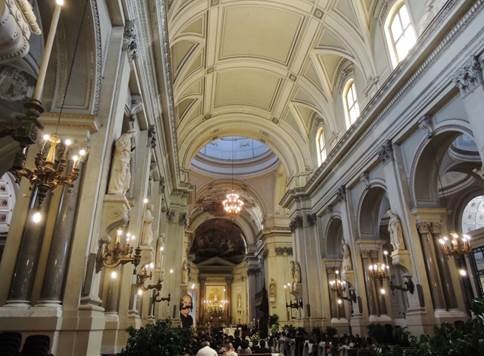
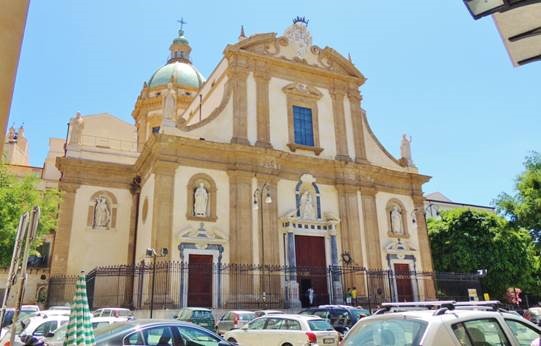
     “Among the most interesting monuments are:  The Lighthouse (the third highest of Italy); Castel Sant’Angelo (the late sixteenth built as a fortification for the sight where you can see much of the coast of Licata), City Hall (Art Nouveau), the Church of Santa Maria Nuova (the ‘400 with some additions of the Baroque period, within which lies the Chapel of the Black Christ), Santa Maria la Vetere (the ‘200, the oldest church in Licata); the Carmine (‘200 complex with a church and monastery), the Church of Sant’Angelo (which houses the relics of the Saint), the baroque churches of San Francesco, of Purgatory, of SS. Salvatore and San Domenico, the baroque palaces and villas in the Liberty style.”

http://casamalerba.it

clip_image001

It’s everywhere, it’s everywhere!!!!

clip_image002

Barrels of wine

You bring your own bottle or buy a bottle or box here and have it filled with the wine of your choice.  Sadly we didn’t like any of his wine though Frank had bought some we tasted and we did like it. 

Maybe it was different wine when we visited.

clip_image003

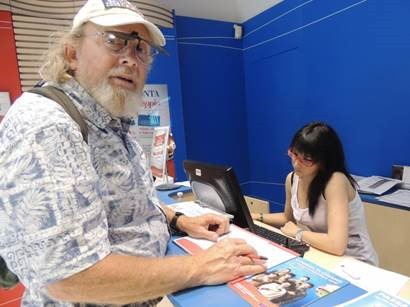
TIM troubles with our Internet dongle

Telecom Italia Mobile.  The real problem was that we can’t read Italian so according to the TIM account page it looked as if our 15 GB had disappeared in two days!!!  (It hadn’t.)  This young woman was as helpful as she could be since we don’t speak Italian.  Google translate helped some, but when she connected us by phone to the TIM hotline and I was speaking to some “not helpful” male, I heard him say “Americans” and then the line went dead.  But Maria in the marina office spent about an hour helping us figure out the problem. (We were reading the account page wrong.)  This young woman was helpful too.  When in Licata ask women for help!!!!!

clip_image004

The lighthouse as seen from DoraMac as well as the fort on top of the hill.

More about the fort later.

clip_image005clip_image006

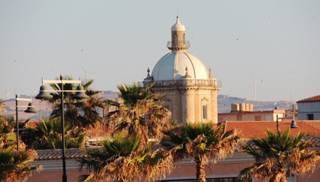
Duomo of  Church  S. Angelo

A telephoto from the boat and looking down from the hillside, but once in town I just couldn’t find it until the last day when I came close…… A regret.

clip_image007

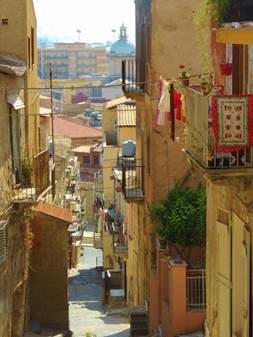
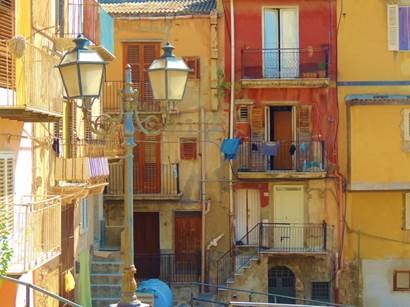
Shadows and light and golden walls: lovely!!!

One morning instead of looking down the tiny side streets I walked through them and saw all of the tiny neighborhoods.  Great fun and friendly people.

clip_image008 clip_image009

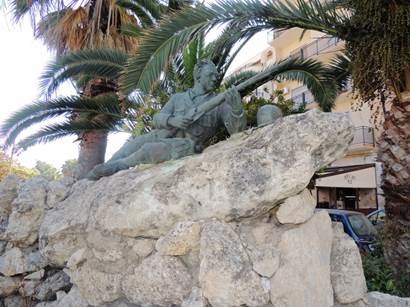
Our landmark intersection with City Hall and the monument to something across the way.

clip_image010clip_image011

clip_image012

Model ship makers

If we’d had time we’d have looked into a model of DoraMac

clip_image013 clip_image014

clip_image015

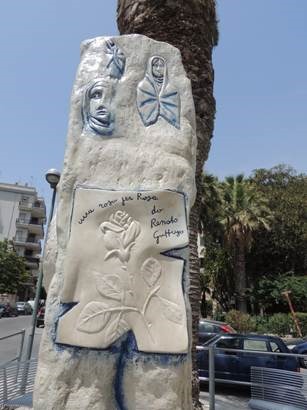
Rosa Balistreri (Licata, Sicily 21/3/1927 — Palermo, 20/9/1990) was a Sicilian folk singer.

http://www.rootsworld.com/italy/balistreri.shtml biographical info about the “Italian Joan Baez.”

http://kalliopeamorphous.wordpress.com/  is an interesting discussion about Balistreri and a criticism of modern pop music.

I like that books are included in the sculpture.

clip_image016

clip_image017

Gargoyles as architecture detail on some of the buildings

clip_image018

Sun and shadow as you wander through the neighborhoods keeping you cool during the heat of the day.

clip_image019

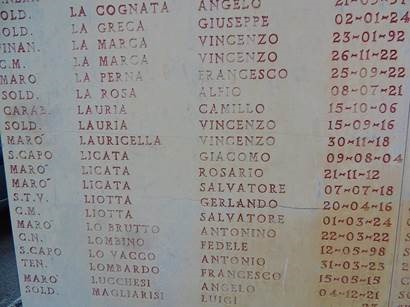
War memorial

clip_image020

clip_image021

Climbing through the neighborhoods  to the top of the hill overlooking Licata.

clip_image022

Calvary

After visiting the Regional Gallery of Palazzo Abatellis in Palermo with all of its Church art, these giant Agave Americana – Century Plants reminded me of images of Calvary.  Century plants bloom once every 100 years.

clip_image023

Street lamp and stone buildings need to be captured in watercolor someday.

clip_image024

Frutteria

Always crazy busy.  Wonderful strawberries and friendly helpful staff.  So far Marmaris and Beldibi still win the fruit and vegetable contest with their assortment and quality of produce.

Palermo horses, graffiti, and this and that finale.

Bonsoir,

  I spent a good deal of the past two days speaking French.  The problem is that though I studied it for years, my vocabulary is miniscule so it only worked but so well and then fell to pieces just at the important parts.  Randal and I spent most of the past two days in El Jem having met  the very talented wonderful French speaking Tunisian mosiacs artist Belgacem Abderrazak.  We visited his shop, his atelier, and also his favorite grilled lamb joint which I won’t describe because you had to be there to see it wasn’t half as bad as reading about it would make it sound.  Just remember when you pick out your lobster or other shell fish; eating fresh is definitely not for the squeamish.  Better to stick to veggie burgers and cheese/tomato/basil pizza. 

  This email wraps up our visit to Palermo.  I will get to the Licata stories eventually.  Tomorrow we’re off to Tunis and Carthage.  We didn’t make it to Djerba today.  The one road from Sfax to Djerba was just too slow, crowded and under construction.  We would have spent too much of today and tomorrow driving so just turned the car around spending a second day in El Jem.  Tunis has the Grande Synagogue so hopefully we’ll see it having missed the oldest African synagogue in Dejerba.  We’d like to visit the American War Cemetery near Carthage but it’s closed on weekends; but maybe Monday if it works out.

  It’s 9:30 pm and I’ve been up since a little past 5 am.  Time for sleep.

Ru

While we were traveling around Sicily I wrote a few thoughts into my “passage to England” journal. I wrote about the sound of Italian which is just like you hear on TV and movies.  Our friend Linda says there are lots of regional accents just as in most countries, but it all sounds “Italian” to me.    It’s actually lovely and musical and looks like such fun to speak that you just want to.  (Until  you don’t understand  and they have to  repeat it all again for you and then they get impatient with you which makes it sound not so pleasant.)

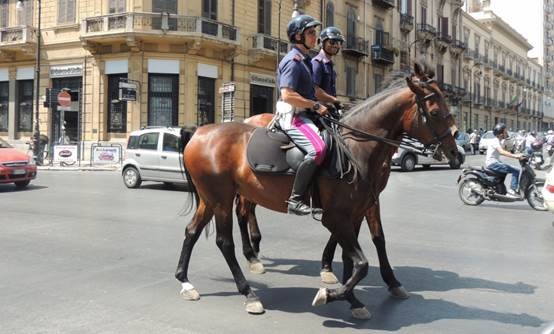
There were horses in the streets of Palermo…..

clip_image001

I took several photos which the policeman in the background noticed so he smiled which I noticed when I downloaded my photos.  Lots of horses in Palermo.

clip_image002

Not a silk purse from a sow’s ear but a feed bucket from a straw handbag. 

clip_image003

Got to get that’s last little bit.

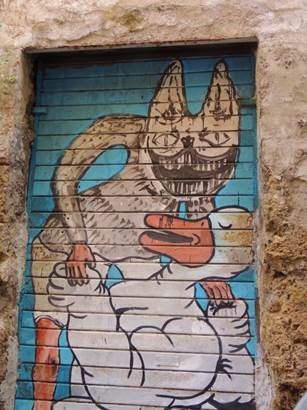
There was graffiti on the streets of Palermo.  I know it annoys most people and in the wrong place, like Homer’s Tomb in Ios, it annoys me too.  But I’ve also come to appreciate the creativity and actual talent behind some of the images.

clip_image004

clip_image005

clip_image006

clip_image007

clip_image008

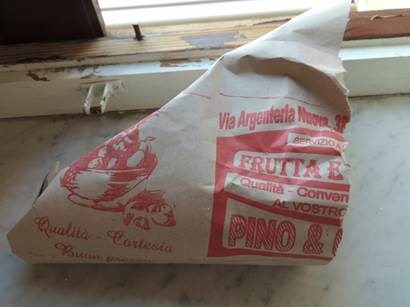
I found this very “somewhere traveling not in the US.”  I bought some peaches and instead of a bag, the grocer tore a large piece of brown paper from a huge roll, formed a cone and put my two peaches inside.  Cool!

clip_image009

clip_image010

clip_image011

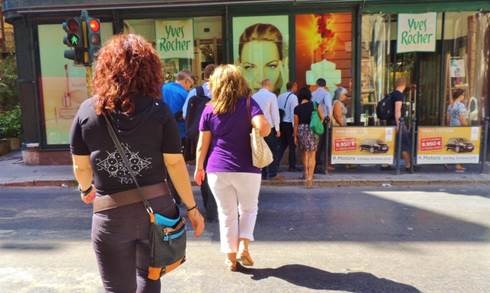
Waiting in line to cross the road.

Barriers lined these 4 opposing corners.  I wanted to cross the street so asked why the crowd of people were just standing blocking the way.   Answer was,  “it’s the crossing the street queue.”  During heavy traffic times there’s a line with everyone waiting her/his turn to cross when the light changes.”

clip_image012

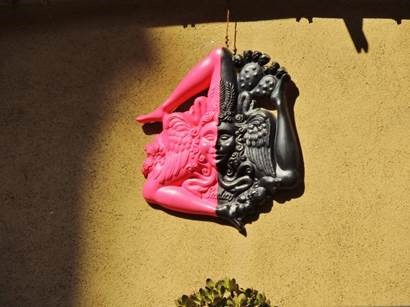
I’m not wild about the pink and black, but the actual image is really good.

clip_image013

Contrasting costumes

clip_image014

A wall of empty produce cartons

clip_image015

clip_image016

Bomb damage is quite the reality check.

Tunisia road trip preview

Aslam,

  Randal picked up our rental car and headed out of town vaguely knowing how to get to El Jem, our first destination.  Some of the road signs made sense and some were like those old Visa commercials where the couple trades their camera for a donkey.   Of course if I’d paid any attention at all during the half-dozen years of French classes we’d have been much better off.  French is the second language of Tunisia.  But folks are friendly and helpful and everyone tells us how safe this country is, so we picked up a man standing along the road and drove him from El Jem to his destination just before Sfax.   Sfax is a fairly large town with an airport but it took us a while to find this (read as any) hotel.  When we had set out for El Jem we didn’t know our final stop for the day so had no hotel plan.  Tomorrow we are heading down the coast for the island of De Jerba to see el Ghriba, the oldest synagogue in Africa.  As it’s will be Saturday we might not see much.  But maybe Sunday morning. 

  Here are a few photos from our stop at one of several mosaic workshops and the coliseum in El Jem.  I’m too pooped to write more.

Ru

clip_image001

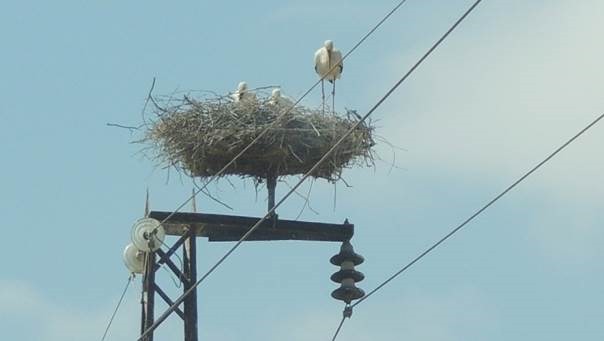
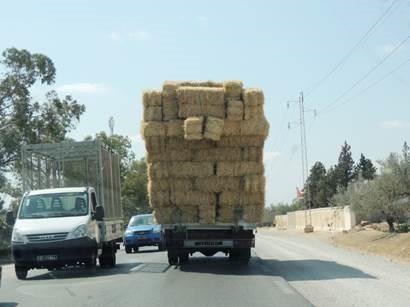
Storks nest on power lines where perches had been added so nests could be built.  There were about 2 dozen in a row.

clip_image002

We opted for the local road rather than highway….

clip_image003

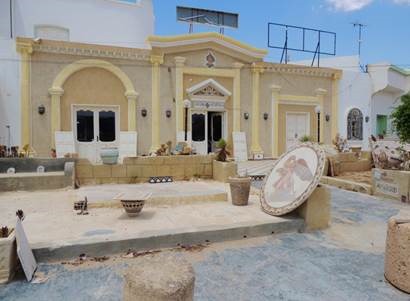
Our first of many mosaic workshop stops

clip_image004

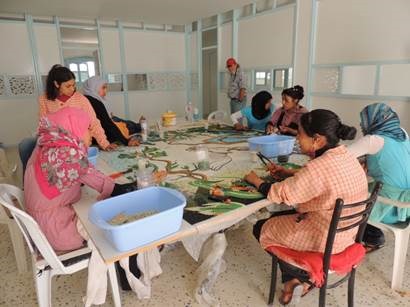
Women working at a glass mosaic with a modern motif

clip_image005

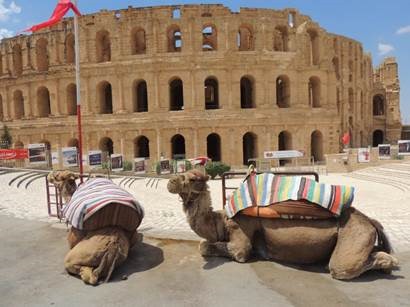
El Jem Roman Coliseum; not Disney, but real

clip_image006

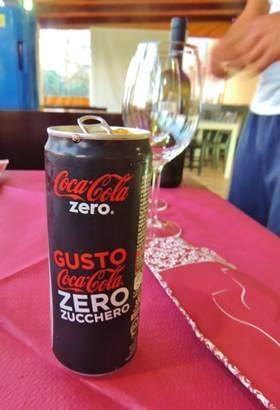
“I’d like to give the world a Coke” are the lyrics, aren’t they? 

Street Scenes and Eating in Palermo # 2

Aslama

   As soon as I hit, SEND, it’s off to the shower and get packed and ready to hit the Tunisian roads.  Not 100% sure where we’re going but ..south probably to Al Djem and the Roman ruins first.  Then we’ll see.   I’ve one more Palermo after this and some Licata photos…so I’m beginning to feel like the white rabbit and racing like mad. 

Ru

Street Scenes and Eating in Palermo # 2

clip_image001 clip_image002

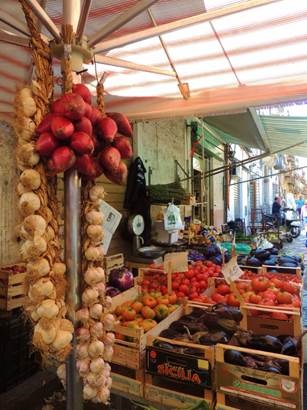
Lovely garlic!

clip_image003

clip_image004

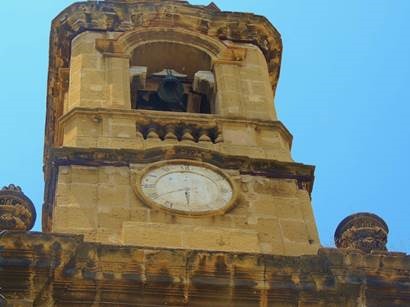
The clock on the tower is painted on!

clip_image005clip_image006

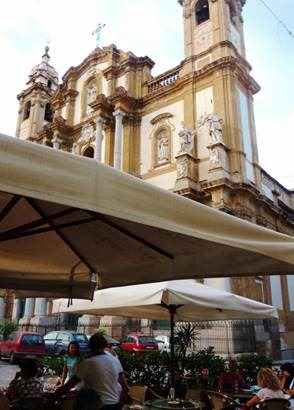
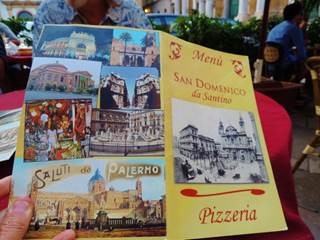
Our favorite pizza place just almost across from our hotel.

We ate dinner our last night and then lunch the next day before heading to the bus station.

Pizza, pasta, pastry = pounds that I’m trying to get rid of here in Tunisia.  So far a lovely salad Nicoise at a marina café and a grilled fish at a Hammamet restaurant Jo and Mick showed us last night.

clip_image007 clip_image008

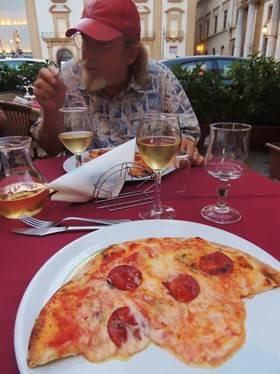
My half of our dinner sausage pizza.  Lunch we split a prosciutto, cheese, and basil pizza.

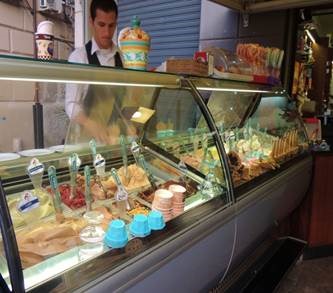
Pizza isn’t available until the ovens are fired up as we found during our lunch visit: we waited the half hour.   But gelato is anytime, everywhere, any and every flavor.  I actually only had it one time during our road trip and it really is wonderful creamy stuff.

clip_image009 clip_image010

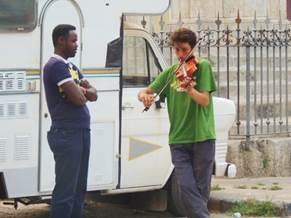
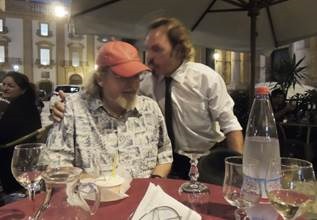
Pizza plaza entertainers

We were serenaded by a violinist as one should be in Italy and tricked by a magician.  Both earned some lira for their performances, hence Randal being hugged. 

clip_image011

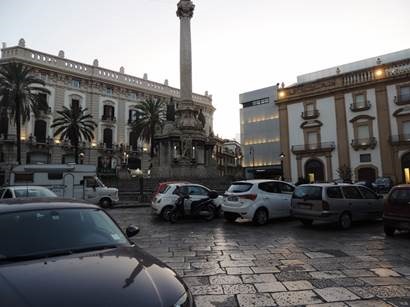
The pizza place plazza

clip_image012

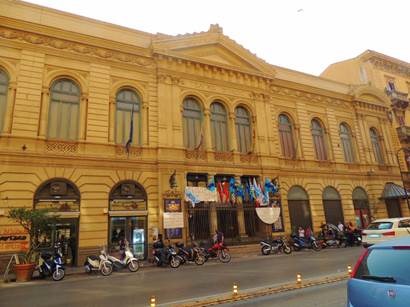
Teatro Biondo, just down from our hotel http://www.teatrobiondo.it/default.aspx  (Italian only)

     “In the middle part of the magnificent Via Roma, one will see the church called St. Antonio Abate and right in front of it, next to the elegant neoclassical facade of Palazzo Arezzo, stand the beautiful Teatro Biondo. Founded in 1903 when Palermo was experiencing a cultural revival, Teatro Biondo was Palermo’s first opera house, also hosting circus performances. Today, the theater hosts mostly plays and many of Italy’s most famous actors and best theater companies have graced Biondo’s stage”

http://travel.aol.com/

Owner description: Teatro Biondo represents the ultimate expression of architecture in nineteenth-century Theater in Palermo, concluding a formidable urban sprawl that had had its most significant stages in the implementation of the Teatro Massimo and Teatro Politeama. Between late ‘800 and early ‘900, in fact, the city lived a particular moment of glory thanks to an enlightened entrepreneurial bourgeoisie, led by the Florio family, and a class of intellectuals.

http://www.tripadvisor.co.uk/

The last places we visited…..

Every morning Randal and I would meet with Linda and Frank and go off around Palermo seeing stuff and then having a late lunch.  Then it was siesta time with plans to re-meet for dinner about 8pm.  Late afternoons I’d walk, Randal would compute and Linda and Frank would do their own thing.  While out and about they found the two lovely huge Palermo theaters but Linda didn’t have her camera.  So our final morning after our visit to Blue Mary, Linda and I raced over to see the theater facades and take some photos.  We were back at the pizza place by noon only to wait until 12:30 when pizza was available to be ordered.  After our race around Palermo she and I deserved our pizza.

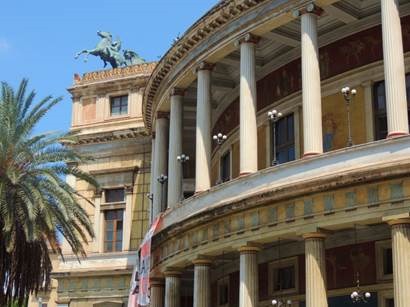
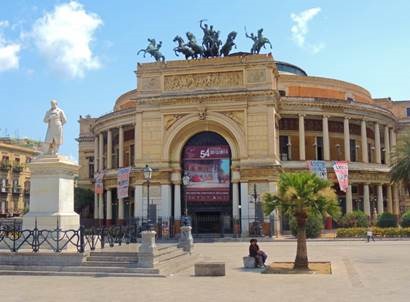
Teatro Politeama on Piazza Politeama

– Politeama Theatre –

Built in neoclassical style, which was in vogue at the end of the Eighteen Hundreds, the Politeama Theatre illuminates the Piazza which shares its name. Designed as a "polytheama", or performance space for a variety of shows, its role in Palermo was to be as central to social life then, as cinema is now.

Equestrian exhibitions, gymnastics, acrobatics, operettas, plays, and social festivities were to be held and seen there. Just before the Politeama was built, moral in Palermo was low after an epidemic of cholera. The city needed a boost, and the authorities, already in favour of building a people’s theatre, encouraged construction despite budget restrictions. In fact it was completed thirty years before the operatic, more aristocratic Theatre Massimo.

Following the ancient theme of entertainment for the masses, the Politeama is structurally reminiscent of Greek and Roman traditions: circular, with ambulatories supported by Doric and Ionic columns, originally made for open air shows.

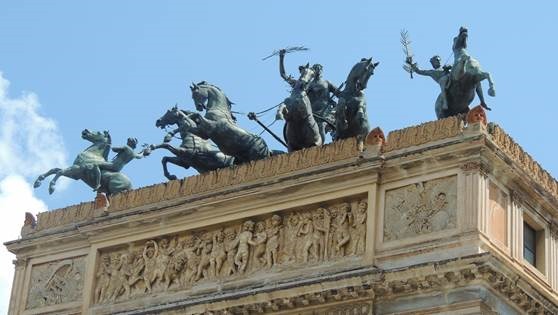
The outside is decorated with a frieze depicting circus performers. The façade is deigned like a Roman (or Napoleonic) triumphal arch, echoing the Hellenic design of the theatres of Pompeii. A bronze horse drawn quadriga  driven by figures representing artistic Talents, by Mario Rutelli, gallop across the theatre roof; Rutelli was also known for the Naiads Fountain in Piazza della Repubblica in Rome.

The theatre’s construction did not run smoothly. Economic, municipal and administrative setbacks hindered building, which, for a while, was completely suspended. At its final inauguration in 1874, the theatre was still roofless. However, by 1891 it was complete, with a seating capacity of 5000, and a truly inspirational roof, facilitating fantastic acoustics, even if, by the original project, the theatre was designed to be uncovered.

Now the top floor is a museum: the Modern Art Gallery "Empedocle Restivo", used to exhibit the works of artists from the Eighteenth and Nineteenth century.  http://www.italyguides.it  has a 360 view of the piazza.

clip_image013

clip_image014

clip_image015

The dancing babies from Ally McBeal!

clip_image016

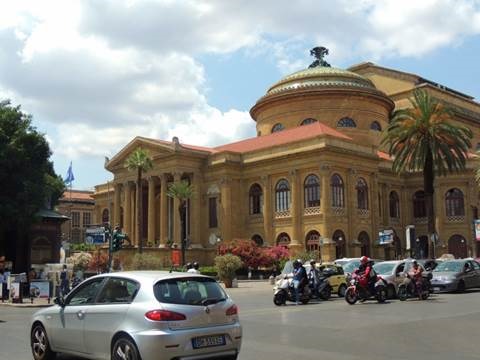
Teatro Massimo  http://www.teatromassimo.it/index_en.php

http://www.teatromassimo.it/teatro/launch_en.swf  site is quite the experience to visit

The Teatro Massimo Vittorio Emanuele in Palermo opened its doors to the public on the evening of 16 May 1897, twenty-two years after the solemn public ceremony of the laying of the first stone.

This took place on 12 January 1875, and ended a chequered series of vicissitudes with interminable squabbles lasting over ten years.

The international competition for the project and realisation of the opera house had been announced by Palermo Council in 1864, and its prime mover was the mayor, Antonio Starrabba di Rudinì.

For a long time there had been talk of building a big new theatre in Palermo, worthy of the second biggest city in southern Italy after Naples.

Palermo, in the second half of the nineteenth century, was engaged in getting itself a new identity in the light of the new national unity.

Cultural life was influenced by the new national physiognomy and the positive consequences of the activity of enlightened entrepreneurs like the Florios, who also made generous donations to the building of the opera house and for some years were also its no less enlightened managers.

Intense commercial relations led to the convergence and development in Palermo of interests with a European dimension and caused the city to be continually in touch with different cultural models than its own. This was the start of the Belle poque, which for the city was a time of cultural and economic rebirth which became mythical and was only to be interrupted by the outbreak of World War I.

http://www.teatromassimo.it/teatro/launch_en.swf

Scenery on sale

The Teatro Massimo puts on sale a number of scenery materials from its productions. A complete list is available through the Purchase Department.  Wish we’d had time for the guided tour and perhaps a go at the scenery sale!

clip_image017

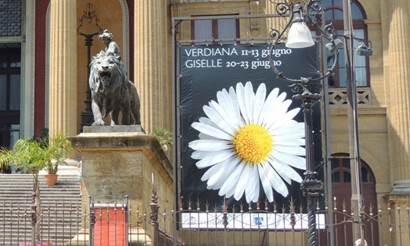
Lions stand guard just like the New York Public Library

clip_image018

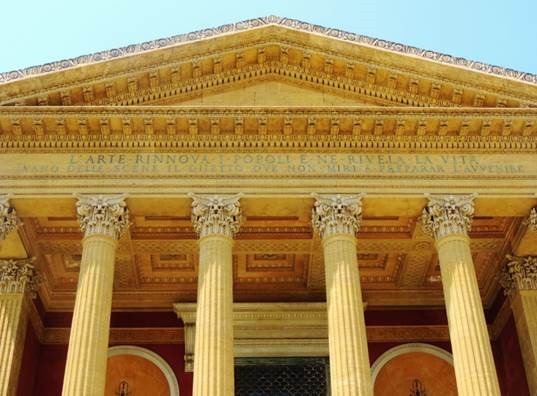
Art renews people and reveals life…or something like that.

clip_image019

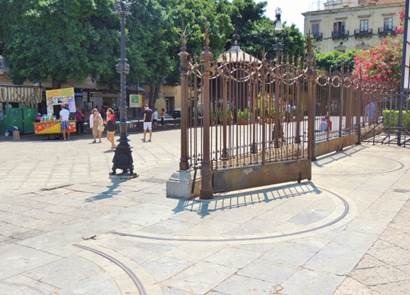
The big iron gates rode on a track to open and close

clip_image020

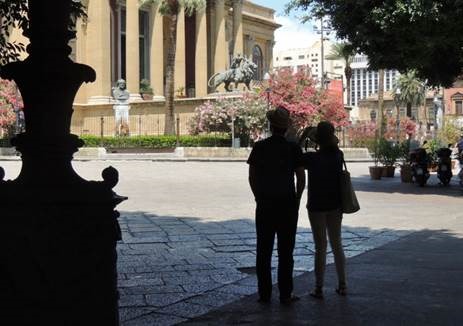
Looking back at the bust of Verdi

clip_image021

The performance just in front of the theater.

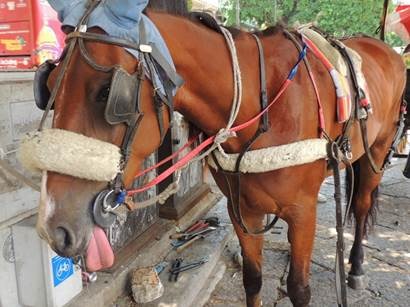
I think this tongue thing was the horse’s own doing.  I know there are nose twitches used when a horse just won’t behave, but not a tongue twitch.  Plus the horse was quite calm and relaxed even with the small crowd that was watching him get new shoes.

clip_image022

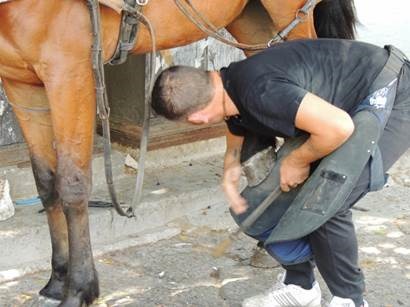
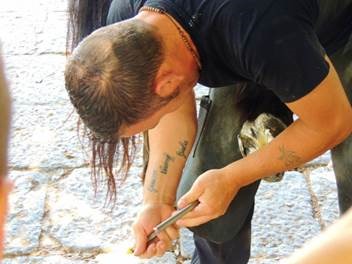
Getting new shoes

clip_image023clip_image024

Pony tail and discarded shoes with rubber padding.

The smith doesn’t have a strange hair style, that’s the horses tail behind his head.

Strolling and Eating # 1

Hi all,

  We’re meeting new pals Jo (short for Joan) and Mick (short for Michael) for dinner at 7 pm.  Tomorrow we’re off to see Tunisia.  So I’m trying to rush through my Palermo photos before we go.  So they’re a bit hither and thither. 

Ru

Street scenes and Eating in Palermo

Eating was always entertaining; just because we became part of the street scene or watched it take place as we walked home from a meal.  Strolling was fun too. 

The restaurant our first night was, fun but the food was only okay.  I’m afraid we got spoiled the first meal in Acireale with the homemade pasta and garlicy clams. 

We did catch this street scene on the way home.

clip_image001

clip_image002

clip_image003

Wonder who ends up with whom?

clip_image004

The streetlights and stucco building made everything look golden.

clip_image005

Back at our hotel

clip_image006

Late morning snack

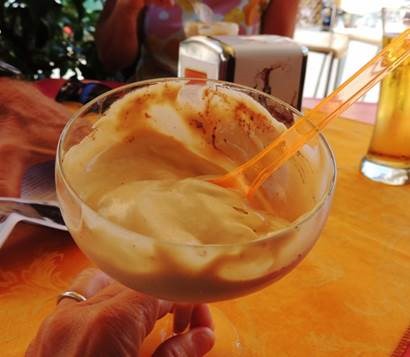
We thought we were ordering iced coffee slush but it was more like coffee flavored cool whip.

clip_image007

This woman was a Singaporean married to a Brit and they were lost so Linda and Frank shared what we knew.

clip_image008

clip_image009

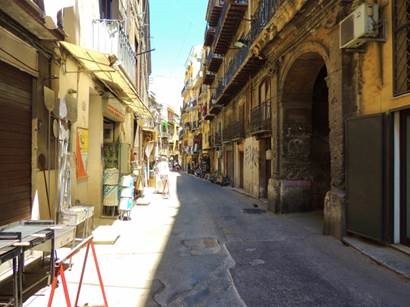
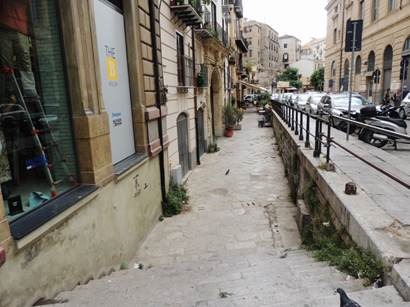
This was a street of small shops mostly selling cooking and baking pots and utensils, but one time it must have been a Jewish section of Palermo.

clip_image010

clip_image011

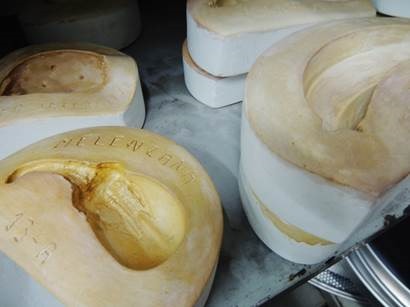
A marzipan mold: unfortunately none with a pomegranate image

clip_image012

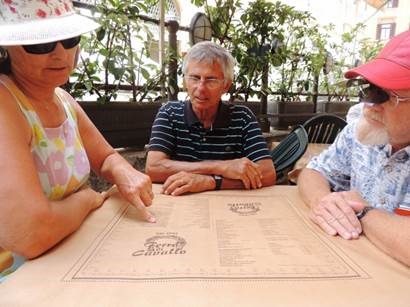
Lunch menu was written on the table paper

Frank had checked on this place late one afternoon and we aimed for it our first night for dinner but it was closed; only opened for lunch so we went there our second day.

clip_image013

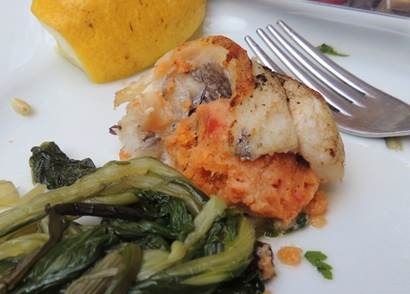
Fish of the day

I remembered half way through to take a photo.  It was some kind of tasty white fish with a cheese, seafood, bread stuffing.  The men at the table near us had ordered it and told us it was good.  And even offered a taste! 

clip_image014

The place was packed with lines waiting for outdoor or indoor seating.

clip_image015

This fellow saw me taking photos and wanted his taken so I did.

clip_image016

All gone

By 5 pm or there abouts when I walked past, it was as if the place had never existed.  They really only do lunch. 

clip_image017clip_image018

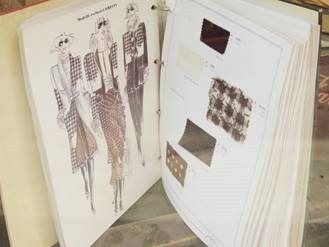
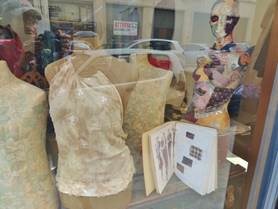
An interesting pattern book and fashion design shop

clip_image019

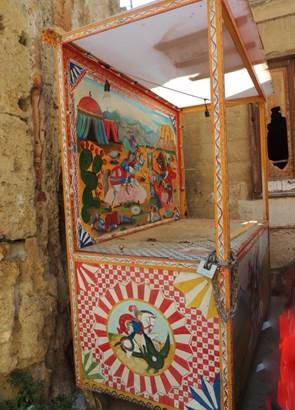
Seemingly discarded puppet theater that we passed in an alley on our way someplace else.

   “The puppet theatre known as the Opera dei Pupi emerged in Sicily at the beginning of the nineteenth century and enjoyed great success among the island’s working classes. The puppeteers told stories based on medieval chivalric literature and other sources, such as Italian poems of the Renaissance, the lives of saints and tales of notorious bandits. The dialogues in these performances were largely improvised by the puppeteers. The two main Sicilian puppet schools in Palermo and Catania were distinguished principally by the size and shape of the puppets, the operating techniques and the variety of colourful stage backdrops.

These theatres were often family-run businesses; the carving, painting and construction of the puppets, renowned for their intense expressions, were carried out by craftspeople employing traditional methods. The puppeteers constantly endeavoured to outdo each other with their shows, and they exerted great influence over their audience. In the past, these performances took place over several evenings and provided opportunities for social gatherings.

The economic and social upheavals caused by the extraordinary economic boom of the 1950s had a considerable effect on the tradition, threatening its very foundations. At that time, similar forms of theatre in other parts of Italy disappeared, some of them to re-emerge some twenty years later. The Opera dei Pupi is the only example of an uninterrupted tradition of this kind of theatre. Owing to current economic difficulties puppeteers can no longer make a living from their art, prompting them to turn to more lucrative professions. Tourism has contributed to reducing the quality of performances, which were previously aimed at a local audience only.”  http://www.unesco.org/culture/ich/RL/00011

In India we saw “dumbed down for the attention span of a tourist” versions of folk performances. 

clip_image020

Imagine the performance…..

In India I could have watched the puppet show far longer than it was performed.  And in Japan too. 

clip_image021

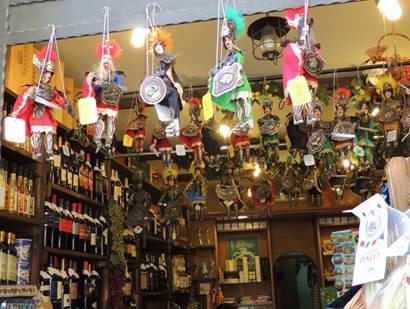
Puppets for sale in many shops.

clip_image022

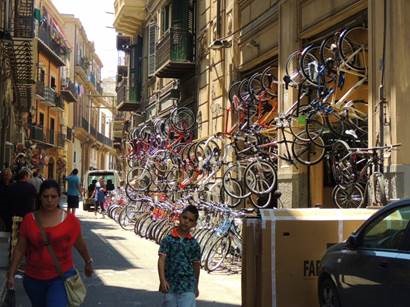
Lots of cyclist, so lots of bicycle shops.

Blue Mary and Stone Eleanor : A misadventure in Palermo

Asalam,

  That’s how Jo says hello and she’s lived here in Tunisia  for 7 years so it works for me.  Tomorrow we’re off in our rental car to see some of Tunisia.  We have a map, some vague plans and too little time, so we’ll see how it goes.  Ramadan starts next Tuesday which does effect some shops and restaurants, but as non-Muslims we’re not expected to observe it at all, but we are expected to be considerate of those fasting and not be so obvious with ours.  (In Turkey it was pretty impossible to tell it was Ramadan and our favorite place Aciktim was always open.) 

   I’ve only taken a few photos so far here in Tunisia as the marina area could be anywhere.  I am sure I’ll take billions on our travels. 

I still have lots of photos from Palermo and this email is about my quest to see the “Blue Mary.”  You are lovers should enjoy this.

Ru

Blue Mary and Stone Eleanor : A misadventure.

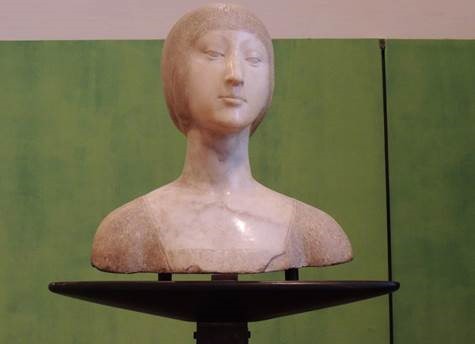
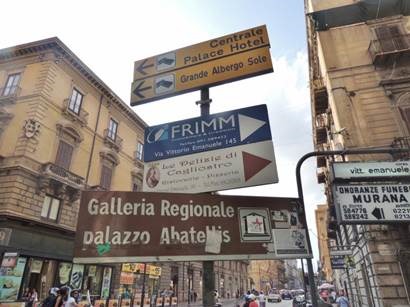
As I’ve written in past emails, I’ve developed an interest in “Mary” from reading authors who see her more as a woman than as a religious icon. While flipping through Sicily Art History Culture and Folklore I came across the painting “The Madonna of the Annunciation” by Antonello da Messina.  The book implied that the painting (and bust of Eleanor of Aragon by Frencesco Laurana) were in the Cappella Palatina.  In reality they are both housed in the Regional Gallery of Palazzo Abatellis  so our last morning in Palermo we all went off to the Gallery. There was a No Photo sign but in the past that’s not always meant NO PHOTOS.    I did sneak one photo of Eleanor, but these No photos signs really meant NO,  so no more photos after that.  My reaction to the Mary painting in real life was disappointment.  There was just too little light on it so the painting looked dull. And small.   I’ve read somewhere that in its original setting by a window northern light shone on it and I’m sure that would have made a difference. 

clip_image001

Photo taken in the gift shop of the Cappella Palatina

clip_image002

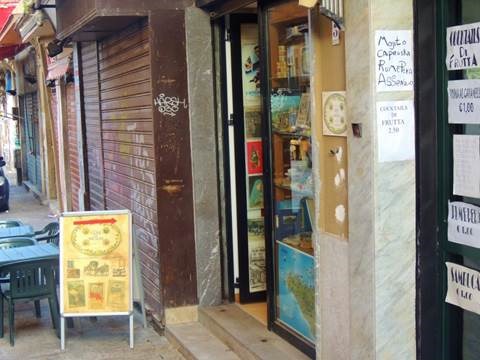
The small shop where I bought my “blue Mary” print which you can see in the doorway below the red print.

The Madonna of the Annunciation visited the Metropolitan Museum of Art in NYC……..

“Although not as well known or documented as some of his Northern Italian contemporaries, like Fra Angelico and Piero della Francesca, the Sicilian artist Antonello da Messina (about 1430-1479) is regarded as the greatest painter to emerge from Southern Italy in the 15th century. He could do almost anything, including monumental, multipart altarpieces, but his particular genius was for the single portrait, depicted in three-quarter view, in which the intensely human play of expression on his subjects’ faces makes a connection with the viewer that few artists before or after him have managed to achieve.

The show’s centerpiece, (Metropolitan Museum of Art.) however, is not a secular but a religious painting, "The Virgin Annunciate" (about 1475-76), regarded as Antonello’s signature work. It is a widely recognized masterpiece, with an air of mystery that often evokes comparison to the "Mona Lisa," whose genius lies in the way in which a traditional icon has been imbued with the life force of a flesh-and-blood human being. The Virgin is depicted as a young Sicilian girl, wearing a bright blue cloak that covers her head, at the moment of the Annunciation, when she is told by the angel Gabriel that she will bear Jesus.

Facing the viewer – but looking slightly down and sideways – with a book on a lectern in front of her, she extends her right hand in a gesture of salutation to the unseen angel (or is she asking him to wait before formally delivering this portentous news?). The foreshortened hand, palm down, seems to reach toward the viewer in what might be a gesture of blessing. A whole speculative dissertation could, in fact, be written about this hand, which seems to have been done by Antonello with a grid of strings known as a velo, through which an object could be observed and transcribed onto a squared piece of paper. The Virgin’s face wears an expression of great serenity with just a touch of the apprehension that a teenage girl might feel who was chosen to carry out such an important commission.

http://www.nytimes.com/2006/01/06/arts/design/06anto.html?_r=0

clip_image003

Eleanor of Aragon (1450-1493) was the daughter of king Ferrante I of Aragon (Ferdinand I of Naples) and Isabella of Taranto. In 1473 she married Ercole I d’Este, Duke of Ferrara and became the first Duchess of Ferrara.

This work is considered to be the epitome of Renaissance-era Sicilian sculpture.

http://www.wga.hu/

http://www.croatia.org/  give some interesting info about Francesco Laurana

clip_image004

On our way to the Galleria

clip_image005

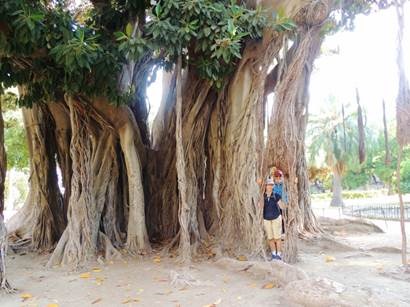
Giant banyan tree near the Galeria

So we got to the Galleria and there was one of those “No Photo” signs that we decided to ignore but were told right away, NO PHOTOS.  How disappointing.  Most of the paintings/art work were church related.  The giant painting illustrating a visit from death was quite a thing to behold.  But honestly, other than Mary and Eleanor, I could have skipped the place.  Randal too I’m sure.   Linda and Frank seemed to enjoy it which was good as I’d sort of dragged us all there.

clip_image006

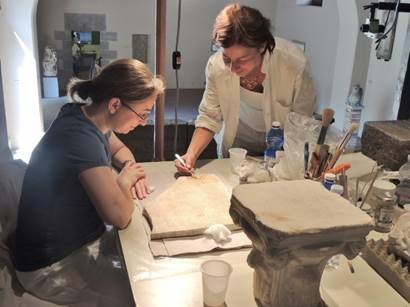
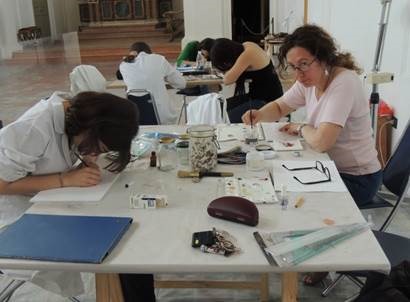
Restoration work

In an alcove just inside the entrance these women were working with tools resembling tweezers.

clip_image007

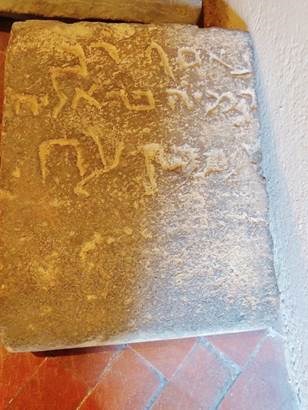
Hebrew letters on a stone slab

I’ve turned the photo so you can see it better. The slab was on the floor in the alcove. The ladies didn’t know anything about it but seemed curious about my saying it looked like Hebrew.  They really didn’t speak English so I couldn’t ask them about their work or the slab with the letters.

There was another museum or piece of the Galleria around back so we went to look there.  We asked if we could take photos and were told yes but later no…..

clip_image008

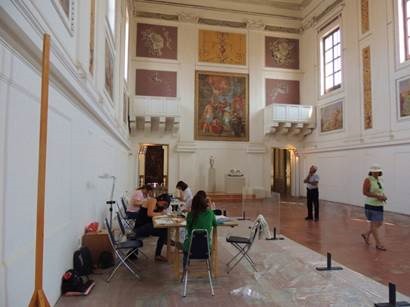
Great floor

clip_image009

Women in what looked to be a watercolor class.

It looked as if they were learning how to make all of the tones of each color from dark to light

clip_image010

I want to be in the class, what a great setting for it.

clip_image011

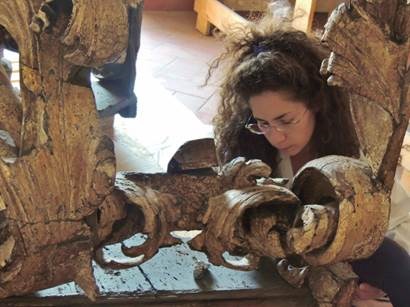
More restoration work

clip_image012

Love the hair!

clip_image013

About 40 years ago I sort of looked like her.  

Four Corners, The fountain and two churches next door

Asalam Alaykum,

   We are as far north as you can be and still be in Africa.  But I’ve never been to Africa before so this counts.  Funny enough though, last night was the first rain we’ve seen since before we left Turkey apparently surprising everyone here too.  There’s a British couple who’ve been here 7 years and they’re helping us with good info.  Makes everything about a new place easier when there’s someone there to show you the ropes.

   But for this email we’re back in Sicily in Palermo.

Ru

Four Corners, The fountain and two churches next door.

Plan A our second morning was to spend some hours at the Archeological Museum, number 1 on Linda and Frank’s list of things to see in Palermo.  We actually walked right past it on the Via Roma because its entire front was surrounded with scaffolding and huge billboards.  All of that was due to the renovations underway, not to be done any time soon that day, week or month.  So we moved along to plan B, more of the Literary Walking tour: the Four Corners, The Fountain and two more churches.

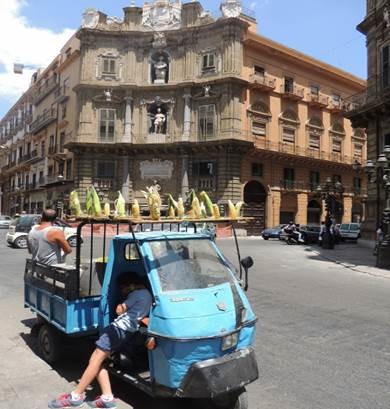
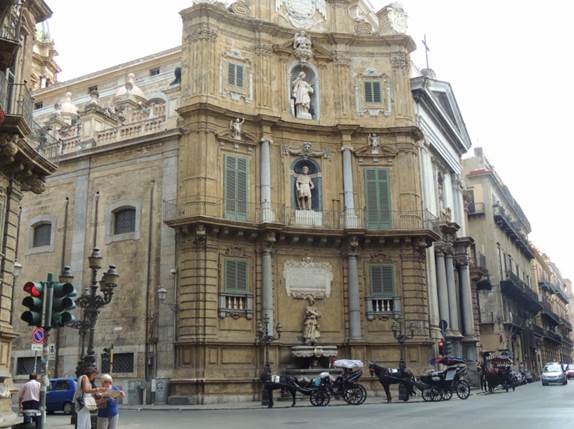
   “Via Maqueda, just beyond the Piazza Pretoria, intersects the CORSO at the renowned landmark QUATRO CANTI, and operatic crossroads with 4 facades bearing fountains and statues of the 4 seasons, the 4 Spanish kings, and the 4 patronesses of Palermo…”    Desiring Italy

“Description: The "Quattro Canti" (Four Corners) is the traditional center of Palermo, the crossroad marking the heart of Palermo’s old historic district. Many of Palermo’s monuments, artistic churches and other sights of historical and touristic interest are located within walking distance of the Quattro Canti. Although almost everyone in Palermo calls the Four Corners "Quattro Canti", the intersection’s official name is actually "Piazza Vigilena," named for the Spanish Viceroy who had the sculptures built on the Four Corners back in 1611. Each of the four buildings that comprise the Quattro Canti, has three levels covered with Baroque sculptures that were designed by the architect Giulio Lasso. The sculptures on the facades of the four buildings illustrate various themes: the Four Seasons, Spanish kings and various patron saints of Palermo’s four old quarters.

The fountains at ground level are typically Baroque. These sculptures were actually executed by a collective of talented local sculptors of that era, among whom d’Aprile, La Mattina and Tedeschi. Thanks to years of exposure to smog and soot, the once pearl colored sculptures have been transformed into a grimy gray that has obscured some of their definition but none of their magnificence.”

Date built: 1608 http://www.fountainsoc.org.uk/fountain/73

The "Quattro Canti"

The “Quattro Canti” is the junction in Palermo. Effectively, it is the centre point of the four areas of the old town centre. You will almost inevitably pass through it and it is worth stopping for five minutes to have a look at its sculptures which were commissioned by the Spanish Viceroy in 1611. The sculptures on each of the four corners depict a variety of themes, including the four seasons, four Spanish kings and the four patron saints of the old town areas.  http://www.thinksicily.com/

clip_image001

There was lots of traffic, human, horse, motorcycle and car, so no remote chance of standing in the center and taking photos all the way round.   It was hard to find standing still space on the sidewalk.  Some horses had blue, some white and some pink ear coverings. 

clip_image002

clip_image003

Selling corn on the corner.

This would be a hit at RAGBRAI, the huge bike ride across Iowa where 10,000+ bicycle riders are always looking for snacks.

clip_image004

Early evening the corners were calmer.

clip_image005

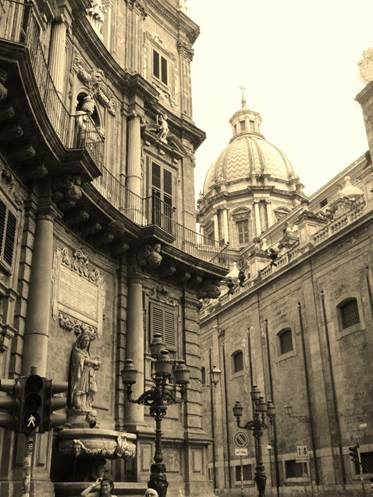
B & W shot of one of the 4 corners. 

The church dome at the fountain was visible from just the right angle.

From the Four Corners we walked along to the Piazza Pretoria.

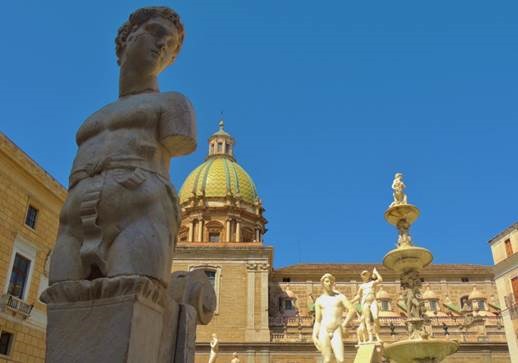
     “Going south-east down Via Maqueda you will come across Piazza Pretoria which is home not only to a splendid fountain but several other impressive buildings including, on the right, the City Hall. The fountain, known for generations as the “Fountain of Shame”, has an interesting history. It was originally built in 1555 by the Florentine sculpture Francesco Camiliani for a Tuscan villa owned by the Viceroy Pedro de Toledo. His son, on inheriting the villa in 1574, thought it a little too risqué for his tastes and sold it to the City of Palermo who erected it where it now stands. The large central fountain is the focal point for sixteen nude statues of nymphs, humans, mermaids and satyrs. If you imagine this being erected during the Inquisition, it is quite easy to imagine why it received its epithet, the “Fountain of Shame”.

http://www.thinksicily.com/

clip_image006

clip_image007

clip_image008

clip_image009

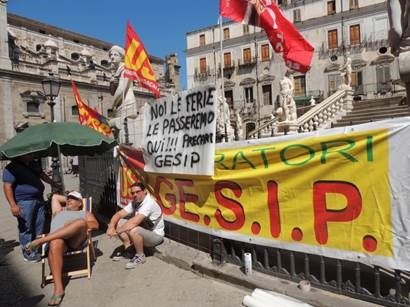
A “laid back” demonstration about something in front of the City Hall across from the fountain.

Around the back of the fountain and City Hall were the Churches of Santa Maria dell’Ammiraglio and San Cataldo, two very different churches.

“The Church of Santa Maria dell’Ammiraglio (La Martorana)

Behind the City Hall, there is another square, Piazza Bellini where you can see two of Palermo’s most interesting churches: the Church of Santa Maria dell’Ammiraglio (more commonly known as La Martorana) and the Church of San Cataldo, instantly recognizeable thanks to its trio of red domes. La Martorana was commissioned in 1143 by George of Antioch, a famous Admiral (a word of Arabic origin) of the fleet of King Roger II. Initially the church was dedicated to the celebration of Greek Orthodox rites but this changed in the 13th century when it became part of the Catholic Church. Several parts of the structure were unfortunately changed during the 17th century and many of the original mosaics were discarded to make way for Baroque frescoes. However, the surviving mosaics are amongst the most impressive ever to have been created in Sicily. Indeed, the craftsmen who were brought from Byzantium by King Roger II to work on the Normal Palace and the Duomo at Cefalu’, also contributed their art to this church. The wonderful bell tower outside is the apogee of Norman-Arab architecture.”

http://www.thinksicily.com/

“The Chiesa della Martorana in Palermo dates from 1143 and is famed for its spectacular mosaics. Its official name is Santa Maria dell’Ammiraglio but it is better known as La Martorana.

The church was founded in 1143 by George of Antioch, the admiral of the Norman King Roger. Dedicated to the Virgin Mary, it became known as Santa Maria dell’Ammiraglio, "St. Mary of the Admiral." The church’s more common name comes from Eloisa Martorana, who founded a nearby Benedictine convent in 1194.

The church has seen its share of history over the years: it was in La Martorana that Sicily’s noblemen convened to offer the crown to Peter of Aragon. The facade and interior were altered considerably in 1588, during the baroque period, but thankfully the glorious mosaics survive intact and on full display.

The graceful Norman bell tower is original from the 12th century. The facade, on the other hand, is a baroque renovation of the original Norman front. Entrance is through a beautiful portico with a trio of ancient columns and double arch openings.

Glittering Norman-Byzantine mosaics from c.1150 cover the interior, including on and around the columns that hold up the principal cupola. The mosaics were overseen by George of Antioch himself, who was of Greek descent and loved the Byzantine mosaics of his homeland. Scholars think the craftsmen who designed these mosaics also did the mosaic work in the Cappella Palatina.

Even after 850 years, the colors remain vibrant: the golden background is pierced with streaks of spring green, ivory, azure blue, and red. High along the western wall is some of the oldest and best-preserved mosaic artwork of the Norman period. Just inside the entrance is an interesting mosaic of King Roger II being crowned by Christ. Roger is dressed in a jeweled Byzantine stole, reflecting the Norman court’s penchant for all things Byzantine. Archangels along the ceiling wear the same stole.”

http://www.sacred-destinations.com/italy/palermo-martorana

clip_image010

The Church of Santa Maria dell’Ammiraglio (La Martorana) and The Church of San Cataldo

clip_image011

Randal put a few coins in her cup.

clip_image012

clip_image013clip_image014

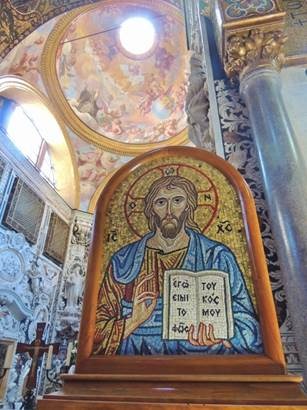
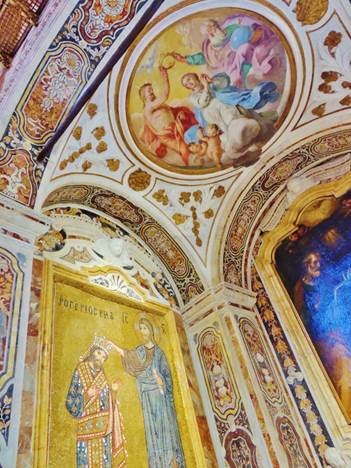
A noticeable mix of artistic styles…Byzantine and Baroque

clip_image015

According to my Sicily book this is a 12th century mosaic of Roger II being crowned by Christ

Next door the red dome topped very austere church.

The Church of San Cataldo

“Standing next to La Martorana is the miniscule Church of San Cataldo, characterised by its three red domes.  It was built in 1154 and has retained its original ascetic atmosphere perfectly. The only decoration to speak of is the original mosaic floor.  It is presently the religious seat of the Knights of the Holy Sepulchre in Palermo.”

http://www.thinksicily.com/

La Cataldo, Palermo

Known for its distinctive red domes, the small Chiesa di San Cataldo is a 12th-century Norman church stands next door to La Martorana in Palermo, Sicily.

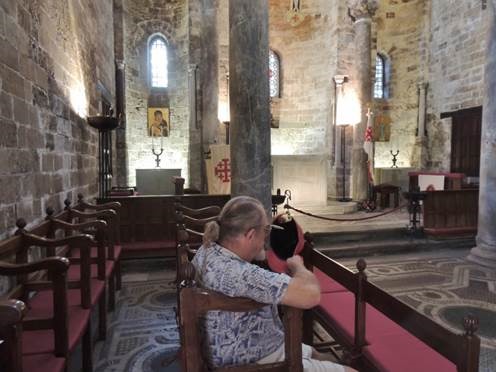
The church of San Cataldo was founded by Maio of Bari, chancellor to William I, during the Norman occupation in 1154. After Maio died in 1160, the interior was never completed. The church has belonged to the Knights of the Holy Sepulchre since 1937.   The exterior of this small church looks like a squat stone box with small arched openings. It is topped by its most striking feature: a row of three Saracen-style, bulbous, red "golfball" domes.

The austere stone interior, with bare walls and three petite stone cupolas over the nave, evokes a strong sense of the Middle Ages. Aside from the carved capitals, the only decoration is the fine mosaic tilework on the floor.   http://www.sacred-destinations.com/italy/palermo-cataldo

clip_image016

clip_image017

clip_image018

The very unadorned domed ceiling.

Palermo # 3 Palermo Cathedral and the Gesu and lunch

Ciao

  My OmniaCom Italia prepaid Internet connection stopped working this morning.  I bought it to download some video for my sister and to finish writing these Palermo emails.  We still have time on our dongle but that means sharing and you know how that sometimes goes.  The prepaid card was for a week.  It worked just fine Friday when I bought it and Saturday too.  Today nothing.  Maria in the office checked and the system seems to be down.  Apparently the ItaliaCom office is closed Sunday so no help there.  So it goes and back to sharing.

Ru

   Palermo Cathedral and the Gesu

We hadn’t planned to visit the Palermo Cathedral; but it happened to be on our way to the Cappella Palatina so we paid our 1 Euro entrance fee and went in.  Most churches were 1 or 2 Euro.

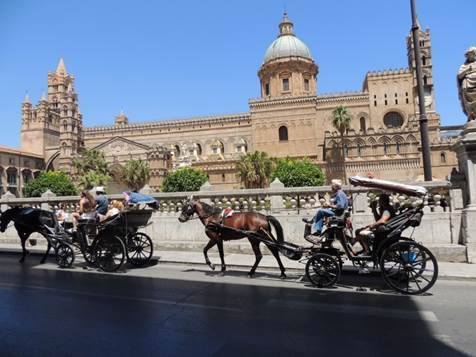
“The Duomo (Cathedral) of Palermo, Sicily, is an impressive 12th-century cathedral encompassing a wide variety of architectural styles.

     In 1184, during Sicily’s Norman period, Archbishop of Palermo Gualtiero Offamiglio founded the cathedral on the site of a Muslim mosque, which had itself been built over an early Christian basilica.

The archbishop’s main aim was to surpass the glory of the magnificent cathedral of nearby Monreale, and the Palermo Duomo became an architectural battleground for "The Battle of the Two Cathedrals." For most visitors, Monreale Duomo remains the winner, but Palermo’s cathedral is still well worth a visit.

     Many additions were made to the original Norman structure over the years. The exterior was "Gothicized" in the 13th and 14th centuries, and the Spaniards made their mark in the 15th century.

But if anyone could be called the culprit for the cathedral’s playground of styles, it is the Neapolitan architect Ferdinando Fuga, who went with the mood of his day and in 1771 and 1809 gave both the exterior and the interior of the Duomo a sweeping Neoclassical style. The only section that the restorers didn’t touch were the apses, which still retain their impressive Geometric decoration.

     As is to be expected given its history, the most prominent characteristic of the Duomo is its many architectural styles. The exterior shows the development of the Gothic style from the 13th to 14th centuries.

The south porch (1453) is a masterpiece of the Catalan style, and at the apse end, sturdy Norman work can be seen through a decorative Islamic-inspired overlay.

The facade is closed between two soaring towers with double lancet windows. The middle portal, dating from the 15th century, is enhanced by a double lancet with the Aragonese coat-of-arms.

The four impressive campaniles (bell towers) date from the 14th century, the south and north porches from the 15th and 16th centuries, and the dome from the 18th-century.

Inside, the Duomo is a royal pantheon, sheltering many tombs of Sicily’s kings. The first chapel on the right contains six of the most impressive tombs, including that of Roger II, the first king of Sicily (d. 1154). He was crowned in the Duomo in 1130.

     Squeezed into an enclosure by the south porch are the remains of Roger’s daughter Constance (d. 1198) and her husband, Henry VI (d. 1197). Henry VI was emperor of Germany and the son of Frederick Barbarossa. Also buried here is their son, Frederick II (d. 1250), also emperor of Germany and king of Sicily, and his wife, Constance of Aragón (d. 1222). The last royal burial here, of Peter II, king of Sicily, was in 1342.

Accessed from the south transept, the Treasury (Tesoro) is a repository of rich vestments, silverware, chalices, holy vessels, altar cloths, and ivory engravings of Sicilian art of the 17th century.

A highlight of the Treasury’s collection is the 12th-century cap-like crown of Constance of Aragon, which was removed from her head when her tomb was opened in the 18th century. Other precious objects removed from the royal tombs are also on display here.

http://www.sacred-destinations.com/italy/palermo-duomo

clip_image001

clip_image002

Cathedral and Bell Tower

clip_image003

Huge

clip_image004

Ghost bride: most of her fades into the gold cloth leaving only a cloud of lace next to the groom.

    As this wedding was taking place we didn’t feel as if we could just go traipsing around taking photos getting in the way or interfering with the service.  And for all of the hoopla about the place I found other churches more appealing.  Even the one in Licata had more instant charm.  I think this one needed way more time and a real tour.  My Sicily book only included photos of the outside so that tells you something about the interior.

clip_image005

Couldn’t resist

Chiesa del Gesù" or Casa Professa

clip_image006

The "Chiesa del Gesù" (Church of Jesus), also known as Casa Professa is Baroque masterpiece located in Palermo’s Alberghieria quarter near the Quattro Canti. The Jesuits built the original church here, the Order’s first one in Palermo, between 1564 and 1578. Afterwards, the Church was enlarged with the addition of side chapels and further decorated in the Baroque manner. When it was finally completed in 1634, the Church was Palermo’s most ornate Baroque church, and still is.

Interestingly enough, a great part of the work here was done by Jesuit priests themselves and not by commissioned artists. The Baroque was the architectural embodiment of the Counter Reformation’s ideals, its answer to the simplicity stressed in most Protestant places of worship. Its ornate stone inlay (intarsia) is the church’s most distinguishing artistic feature.

Casa Professa was damaged during World War II, but was superbly restored following that conflict. It is open most mornings from 7 until 10:30 and most afternoons from 5 to 6:30. Nearby is the Ballarò street market and the medieval Church of San Nicolò. The market, and its very name, dates from Arab times.   http://www.bestofsicily.com/4canti.htm

clip_image007 clip_image008

clip_image009

clip_image010

clip_image011

clip_image012

clip_image013

Streets leading to the Gesu

clip_image014

The egg  landmark…

These same eggs were there the next day and a local heard us noting that and said they’d been there for hundreds of years.

clip_image015

A popular hair style for the bigger guys too; I wanted to ruffle the longer hairs but settled for a photo.

clip_image016

Lunch…pasta and panino just a down the street a bit from the Gesu.

In Italy, panino is the word for a sandwich made from bread other than sliced bread, in which case Italians call it a tramezzino….according to Google.

clip_image017

One of the many examples of graffiti

clip_image018

The market that surrounds the Gesu

Once maybe there were artisans, but now it’s mostly plastic and fruits and veggies.  This was our first visit but we came again the next day and really wandered through.

Palermo # 2 Central Library and Cappella Palatina

Ciao

   Our first morning in Palermo we saw the Central Library and the Cappella Palatina.   I had the literary traveler tour and Linda and Frank had an actual Sicily tour book with a very useful map, so between us we saw quite a bit.

Ru

Biblioteca Centrale della Regione  &  Cappella Palatina 

clip_image001 clip_image002

clip_image003

I couldn’t resist a stop into the Regional Central Library. 

They men behind the desk to the right of the photo said No Photo inside.  They also said something about documents.  Either we needed documents to enter or it was a document library.  Reading about it, the only English info I could find makes it sound an interesting place.

Biblioteca centrale della Regione siciliana"Alberto Bombace"

clip_image004

A parchment roll divided into 10 sections written in Hebrew, illustrating in miniature an episode of the Book of Esther, in the Central Library of the Region in Palermo. http://dieli.net/SicilyPage/JewishSicily/JewishTraces.html

“The Central Library of the Sicilian Region is the most recent designation of an Institute existing since 1782. The Royal Library was opened by order of Ferdinand l inside the monumental complex consisting of the College of the Jesuits and the baroque church of S. Maria’s Grotto. The Society of Jesus had been expelled 1767.

Once Italy was unified it took the name of National Library. The institution has been enriched through the years by numerous purchases and private donations. During World War II the Library was heavily bombed and temporarily moved to a palace in Via Maqueda Mazzarino.  The Library was returned to this original seat in 1948 after a restoration.  Since 1948 work has continued with the construction of a "book tower" at least 26 meters high, the construction of the reading room, the remaking of the General Reading Room. In 1977, following the transfer of powers in relation to cultural property by the State to the Region of Sicily the Library has assumed the name of Central Library of the Sicilian Region. In 1979, the calamitous collapse of the upper gallery of the library forced to a new closure and long restoration project completed in 1985.

The library contains a vast and rich collection of valuable books, such as Arabs codes, Greeks and Latins texts.  Among the collections are reported complete certainly that of Didot and Teubner Greek and Latin classics

http://www.tripadvisor.com/Travel-g187890-d1437277/Palermo:Sicily:Biblioteca.Regionale.html

clip_image005

War destruction across the road.

A passerby told us the real photo was across the street from the library; the unreconstructed war damage.  We saw other examples during our strolling.

clip_image006

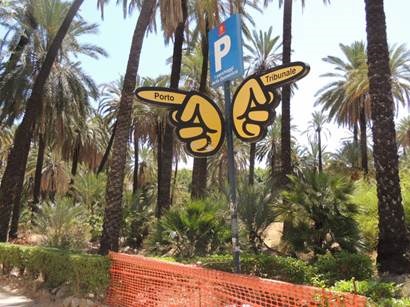
Port one way; courts the other.  I’ve no idea why this combination other than the fickle finger of fate.

clip_image007

The backside of the Pallazzo dei Normanni ; the location of the Cappella Palatina

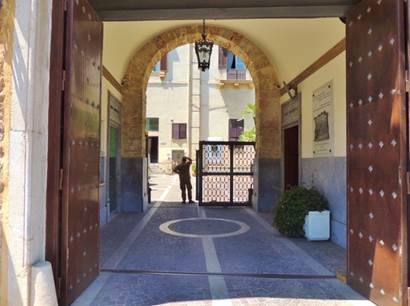
We had no exact idea where in the complex to find the Cappella Palatina but when we asked about entry here, not only were we told No, but the gates were closed on us.  A kind local told us we had to go around the other side of the complex.

We found our way to the front entrance and to the confusing ticket booth.  It was hard to tell what was free, what had a lower fee and what had the higher fee.  Turns out, ours was the middle fee as the royal apartments were closed but the Cappella Palatina was open.  I’ve no idea what was free.

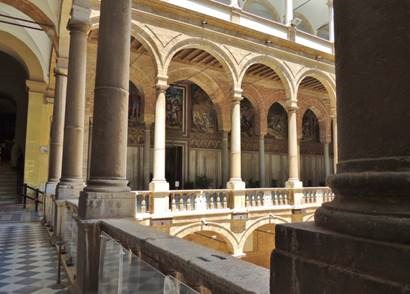
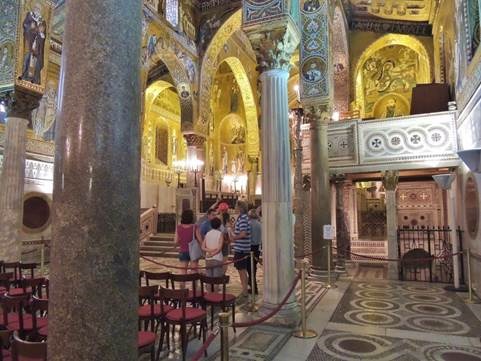
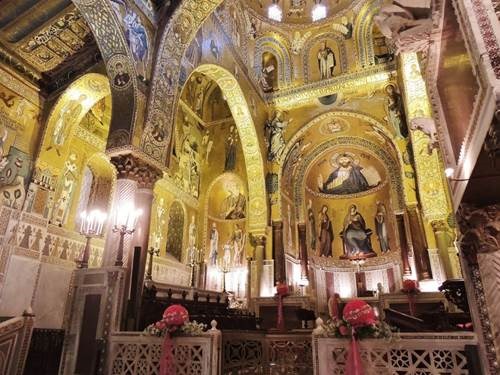
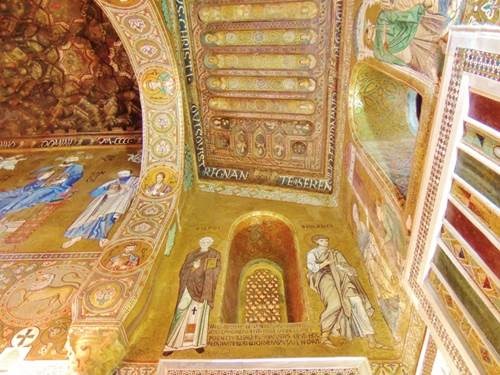
“Located within the Palazzo dei Normanni (Palace of the Normans), the Cappella Palatina (Palatine Chapel) is the finest example of Arab-Norman art in Palermo. Built by Roger II from 1130 to 1140, the chapel is adorned with extraordinary Norman-Byzantine mosaics. Together the palace and its chapel are the greatest attractions of Palermo and the only must-see sight for visitors with limited time.

(Not sure I’d agree, but whatever.)

     The palace was originally built for the Arab emirs and their harems in the 9th century, on a site earlier occupied by Roman and Punic fortresses.  Eventually abandoned by the Arabs, the palace was fully restored by the conquering Normans. The Palatine Chapel was completed by the Norman king Roger II in 1140.

     After the Normans left, the palace fell into serious decay until it was discovered by Spanish viceroys. In 1555, they began to restore it and it became a royal residence once again. Today, the Palazzo dei Normanni is the seat of Sicily’s semi-autonomous regional government.” http://www.sacred-destinations.com/italy/palermo-cappella-palatina   has more photos and descriptions.

http://www.wga.hu/html_m/zgothic/mosaics/4palatin/index.html has good photos and description of the mosaic images.

clip_image008

Cappella Palatina entrance

There was that nasty No Photo sign just at the entry; but here it meant No Flash. 

clip_image009

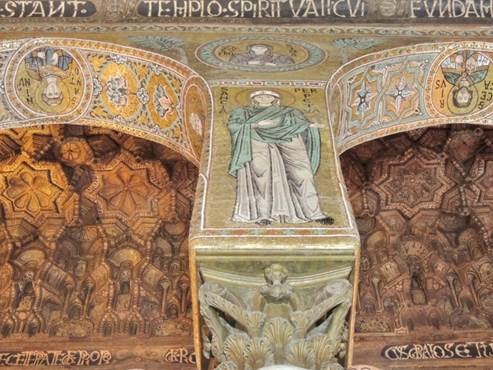
It actually was pretty impressive with mosaic artwork everywhere.

clip_image010

clip_image011

clip_image012

clip_image013

clip_image014

My momma was from and my poppa was from…

Linda, whose mother and father were born in Sicily,  made friends everywhere and that was fun for us too.  That’s Frank with the guide book which thankfully had a map.

Palermo # 1

Ciao,

  Well today is our last day in Sicily though one could stay in Sicily for a month and have lots to see.  We have actually been here 10 days longer than we’d planned thanks to the strong winds and seas.  Tomorrow’s weather is looking good and there will be several boats leaving early in the morning to make good use of it.  We should be in Tunisia Tuesday midday in Hammamet at the Yasmine Marina.  I don’t know much at all about Tunisia but when I linked it with watercolor I got lots of Internet hits.  Apparently Tunisia had a huge impact on Paul Klee among others.  Not much was available on Kindle but I did download Fountains in the Sand: Rambles Among the Oases of Tunisia by Douglas Norman who died in 1952 so I imagine some things have changed. It will be interesting to read his chapter on Hammamet.

   I will try to get off maybe one or two final emails about our days in Palermo, but some of it and some images of Licata will have to wait until we’re settled in Tunisia.

Ru

Palermo with Linda and Frank Szerdahelyi 

     I sort of wanted to visit Palermo because our Sicily book made some of the sights look quite  spectacular.  And it was like, “how can we go to Sicily and not visit Palermo?”  As I wrote in an earlier email,  our attempt to drive there was a total failure.  Before leaving on our road trip we’d met cruisers Linda and Frank Szerdahelyi here to visit Linda’s Sicilian relatives and to see Sicily on their way to crossing the Atlantic.  They too were still here waiting for good weather when we returned so invited them to come for Randal’s attempt at clam pasta. (Very good!)  During dinner they mentioned they were going on a 2 night trip to Palermo and I said, “Oh, maybe we’ll catch the same bus as you.”  Well that turned into a lovely visit to Palermo with Linda and Frank.  We booked into the same hotel Linda had found on Via Roma just near all the sights we’d want to see.  Randal and I had planned to stay just one night but added another as we were having such a good time and there was so much to see. 

We all met on the marina dock 6:30 am Tuesday for the 15 minute walk to the bus station and caught the 7 am bus which would arrive in Palermo about 10:15.  By car it would probably take half that time, but we made stops in small towns and once so a man could retrieve his sun glasses from his luggage in the bus storage compartment.  We also made a “comfort stop.” 

     The Palermo bus station was just a 15 minute walk from our hotel.  We were too early for check-in but left our bits of luggage and tortoises Olive and Oliver (more later on that) and off we went for snack and then some sights. 

     Linda and Frank had some specific things they wanted to see as did I.  As in Etna I had a walking tour from the book Desiring Italy.   Cahill’s Literary Traveler suggestions made me especially want to see the Gesu, the Baroque church of the Casa Professa with its “incredible wild display of marble and sculptural decoration” and the surrounding streets full of vendors; and also the Quattro Canti “an operatic crossroads with four facades bearing fountains and statues of the 4 seasons, 4 Spanish kings of Sicily, and the 4 patronesses of Palermo.”  My Sicily Art History Culture and Folklore book had a 15th century  painting of Mary that caught my eye.  The book seems to imply that the painting is located in the Capella Palatina, another fantastic place which we visited looking for the painting.  The painting isn’t there; it’s in the Palazzo Abattelis; so it was also added to our list.  Super unfortunately for Linda and Frank, the archeological museum, a main attraction for them, was closed for renovation.  One could spend days and days in Palermo studying each beautiful church or fountain or building.  We saw what we could in two and had great fun.

Hotel Moderno

http://www.hotelmodernopa.com/eng/?page_id=4

clip_image001

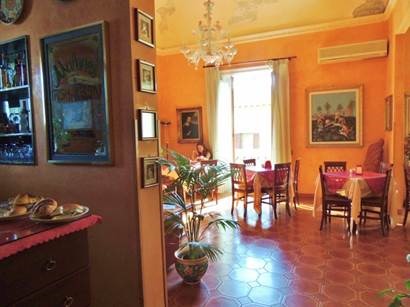
The lovely breakfast room.

It was better than modern as it felt “not modern” so had more atmosphere.

clip_image002

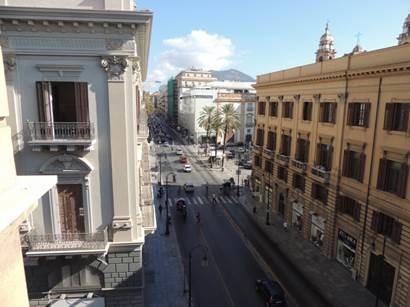
View of Via Roma from the breakfast room

clip_image003

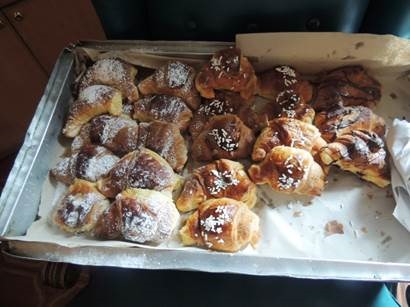
Breakfast always included a wonderful Italian pastry

I sadly discovered that the 3 Ps. Pastry, pizza and pasta = pounds!  I truly have gained 5 pounds since we’ve been in Sicily.  Amazingly I haven’t had to resort to Elizabeth Gilbert’s “big girl pants” yet; but if I don’t watch out!  Wonder what they eat in Tunisia? 

clip_image004

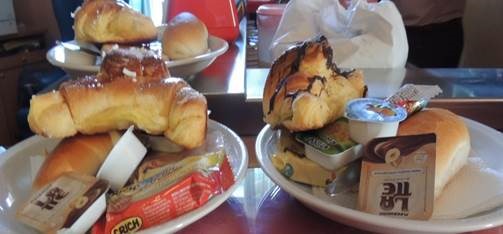
Breakfast was pastry, roll, butter, jelly, Nutella, juice some cookies and crackers and gallons of cappuccino.

clip_image005

The elevator cage. 

We were on the 4th floor, one level above reception and breakfast.  I could find my way around Palermo better than I could find our room because of the maze of interlocking corridors.  The four of us and our tiny bit of backpack luggage and tortoise cooler bag totally filled the actual tiny elevator that always started each trip with a clunk, but never failed or stuck you between floors like the half million lira place we stayed in during our visit to Rome in 2000. 

clip_image006

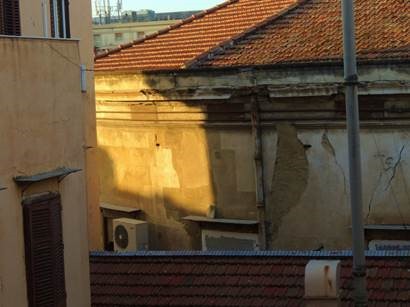
Our room didn’t have a great view, but you could always see the sunlight  and hear the screaming seagulls. 

clip_image007

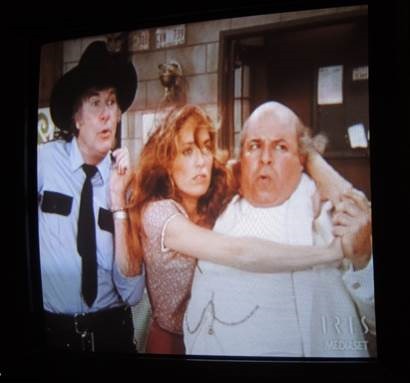
Dukes of Hazzard in Italian.